Arnold J. Toynbee Quotes
We have not abandoned our old belief in liberty, justice, and Self-help, but we say that under certain conditions the people cannot help themselves, and that then they should be helped by the State representing directly the whole people.
Arnold J. Toynbee, 1852-1883, English Economic Historian & Reformer, Uncle of Historian Arnold J. Toynbee, Lectures on The Industrial Revolution in England, 1884
Sourced by: Eigen's Political and Historical Quotations


Before America, many political thinkers believed that popular sovereignty and liberty are incompatible concepts—that the tyranny of the majority would trample liberty of all kinds of minorities: intellectuals, the wealthy, different religion, smaller religions, original thinking, cultural independence. However, Mandelbaum’s theory is that the social safety net, makes everyone wealthy to enough an extent that most will not trample others liberties for an even greater wealth. Inequality of wealth is tolerable if all have a modicum of a standard of living, but if some or many do not even have that, other’s liberties are less important than their own survival.


RSD Party platform. The Russian Social Democratic Party was in 1887 a very modern democratic party inside the feudalism of Tsarist Russia. The Tsar and the nobility thought them wild radicals and yet their party platform was not only reasonable, but in large part influenced by the American Constitution, Bill of Rights, and then current practices in America. It is hard to believe but at the time a Russian could not work at an occupation he chose but could only do the work that was permitted by the aristocrat who owned the land he lived on. The Tsar, Alexander III, was a terrible autocrat, unlike his father who had desired some reform and abolished serfdom. All efforts at any kind of Democratic reform were put down, and Russian reformers in this party tended to split between those who still hoped for reform and those who saw violent revolution as the only hope. By 1906 the party which had no success at any of their planks of reform had split into two main subgroups—the Mensheviks and the Bolsheviks—both active revolutionary groups, but the Mensheviks tended to be more democratic and moderate and wanted to include the workers and the middle class whereas the Bolsheviks saw the middle class as part of the problem and argued for a more radical political structure. The real split occurred after the 1917 revolution when the Mensheviks lost popularity among the Russian revolutionists as not being radical or realistic enough in what it would take to transform Russia. The Bolsheviks gained control and by 1921, they had outlawed and purged the Menshevik party. That was the last hope of democracy in Russia, as the Bolsheviks model was that which guided the country until the fall of the Soviet Union.


Mormons have been divided on this issue. Many Mormons do accept welfare, and government subsidies for agriculture and other business corporate welfare and some hold with Benson’s view and would not accept for example agricultural subsidies for not growing crops. Ironically, Benson, as the Secretary of Agriculture, presided over the nation’s largest give-away program for not working: agricultural subsidies. However, this statement was made after his government service and was made as President of the Mormon Church.


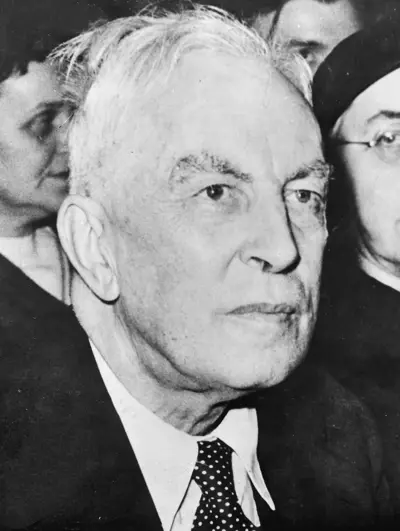
Arnold Joseph Toynbee CH FBA was a British historian, a philosopher of history, an author of numerous books and a research professor of international history at the London School of Economics and King's College London. From 1918 to 1950, Toynbee was considered a leading specialist on international affairs.
