Avraham Burg Quotes
We have a very vivid democracy, but it's very fragile, partly because of our inner conflict. What is the real authority, the Knesset or … the synagogue? Are we a democracy or a theocracy.
Avraham Burg, Speaker of the Israeli Knesset, Quoted in New York Times, July 28, 1999
Sourced by: Eigen's Political and Historical Quotations

Although the Puritans were the first religious group of immigrants who came to America for religious freedom, once the obtained it, they were terribly despotic in trying to force others to adopt their religious views. By seeking religious freedom the planted the seeds of democracy. By denying it to others, they also planted the seed of the First Amendment. Those who insisted upon separation of church and state always cited the Puritans as example one of what can happen with an established church in America.

Ironically, without the word “wicked” most people would regard the first sentence as a good description of elements of a modern democracy. It illustrates that for the Islamic fundamentalist democracy substitutes the rule of man for the rule of God, freedom of speech allows heresy and blasphemy to to uttered and communicated, and religion which is supposed to inform and direct politics. So what is good for the lover of democracy is the very thing that is bad for Islam. This is not a uniquely Islamic viewpoint. It has been and is held by fundamentalist Christians and Jews as well who would return to Biblical law punishing blasphemy and heresy with death and have religion drive all politics.


Joseph ben Matthias. The term was coined by Josephus to refer to the fundamentalist, orthodox Jewish view of a proper state, as opposed to a secular government. The Jewish fundamentalist dream of a theocracy came down through modern times. There were ultra-orthodox Jewish groups who opposed the creation of the State of Israel on the grounds that it is not a theocracy and there are some who still want to see Israel transformed. The term became generalized and is applied to any state where the religion is the state and religious leaders dominate and control the state. The ultra orthodox Muslims, as in Iran, are generally the only religious group who have created theocracies or semi-theocracies as Islamic states. See {638106} for the context in which the term was first used.


At the time there was an issue of religious freedom that is in public discourse: It emanated from the Obama Care law which required employers to provide health insurance that does not discriminate against women by refusing to disallow coverage for birth control (pills, diaphragms, etc.) This legislation covered the employees of general institutions run by religions such as schools, hospitals, and retirement communities. Roman Catholics and other religions which viewed birth control as a sin were put in a position where they had to pay for something that they regarded as sinful. So the church did not have complete religious freedom. However, if these institutions would deny to their employees a basic right that the law says belongs to all institutions. If an exception would be made for birth control what about blood transfusions. The Jehovah’s Witnesses believe that autologous blood transfusions are contrary to the world of God. So what if institutions they run decided to not cover these transfusions in their insurance policies? Or a Jewish University or a Muslim cultural center decided not to cover medical procedures in hospitals that serve pork? There have been many examples where one religion’s freedom has been curtailed slightly when they conflict with individual rights or other rights. Plural marriage for Mormons and Muslims are against the law. Christian Scientists have been forced to provide medical care for some members even though their religion prohibits it. There is no solution that will not curtail someone’s rights under some circumstances.


Gabriel exaggerates in the sense that while the quotation is correct for many Muslims, it is by no means true of all. Iran for example is an Islamic theocracy, but Turkey is a 99 percent Muslim nation which is totally secular and in some ways is much more restrictive of Islamic teaching and practice than most secular democracies. The fundamentalist Muslim view of the state and religion is essentially the same as the ultra orthodox Jews and Christians. It is true that a greater proportion of Muslims believe in the merging of civil and religious law than Jews and Christians, but by no means all. The non Arab Muslims are much less likely to see the unity of state and religion.

This quotation is one of the most powerful indictments of religion in the political sphere. Historically, religions have supported the status quo in political society even. However, individual clerics have been in the forefront of many if not most of the movements toward freedom and democracy. For example, American religious institutions general supported slavery and legal discrimination thereafter, yet clerics were major abolutionists and major contributors to the Civil Rights Movement. Even today, American churches are the most racially segregated institutions left in America. See {620780} for his view on Christianity in particular.

The Degel HaTorah party was an ultra-orthodox Jewish minor religious party whose view of a Jewish State was very similar to the ultra-orthodox Muslims who believed that holy books of their religion are the only valid laws and must supersede everything else like man-made Constitutions or laws. For them there was NO separation between church and state. For Gafni, therefore, if a court ruling or law conflicted with the Torah (the first 5 books of the Old Testament – The Law of Moses-- it contravened the notion of a Jewish State. The vast majority of Israeli Jews believed that the civil law must trump anyone’s personal interpretation of the Law of Moses as interpreted by the ultra-orthodox or anyone else. See {636125} for another instance where Gafni complained that Israel was no longer a Jewish State.


This quotation illustrated the extreme polarization between the current fundamentalist Muslims, and the Muslim modernists and the West. Kamal Ataturk, the great leader and stateman who is the father of modern Turkey, is castigated by the author for leading the new Turkish parliament to depose the Caliph – the civil and religious autocrat, one of whom reigned from after the death of Muhammad till his abolishment in 1924. Most of the rest of the world credits Ataturk with being one of the great leaders of all time—one who led a democratic revolution which transformed Turkey into the only Muslim secular democracy, requiring pubic secular European type education for all children, giving women the right to vote (before the U. S. even), adopting a European alphabet and dress, and outlook on life—creating most remarkably a total cultural revolution with virtually no loss of life. No revolutionary leader, before or since has led so extensive a political and cultural revolution, and it was a bloodless revolution. Turkey, into the 21st century, was by far the most powerful, industrialized, scientific and modern nation of Muslims in the world and others were far behind. Yet many Islamic theologian still castigate Atatork for his great achievements as being against the will of God.
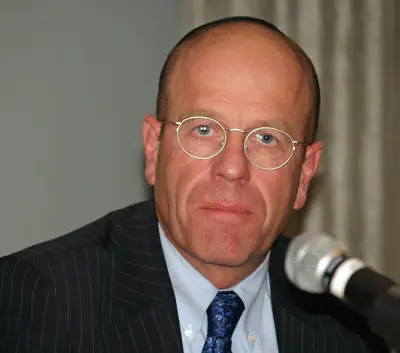
Avraham "Avrum" Burg is an Israeli author, politician and businessman: he was a member of the Knesset, chairman of the Jewish Agency for Israel, Speaker of the Knesset, and Interim President of Israel. He was the first Speaker of the Knesset to have been born in Israeli territory after independence in 1948. A member of the Labor Party when he was a member of the Knesset, Burg announced in January 2015 that he had joined Hadash.
