Henry John Temple Quotes
We do not want to make Afghanistan a British province, but we must have it an ally on whom we can depend.
3rd Viscount Palmerston. Afghanistan geographically is in a very strategic place, and for centuries major powers have wanted to either control it or have a very friendly government there. The highly independent Afghans are fierce fighters and have repulsed all the major powers who have tried to colonize it. The same independence makes governing the country very difficult, and there has not been a competent government that could control the country at any time in history.
Henry John Temple, 1784-1865, British Prime Minister (Whig), Statement, ~1840, Quoted in William Dalrymple, The Battle for Afghanistan, 2013
Sourced by: Eigen's Political and Historical Quotations


This was very much a minority opinion at the time, and has much historical significance as he was the father of the British Prime Minister, Neville Chamberlain, 1869-1940, whose appeasement of Germany led to Word War II. . See {585941}.


At the time Pakistan was almost a failed state which had nuclear weapons. They took large amounts of American aid (military and civilian) and claimed that they were an ally in the War on Terror. On some occasions they deployed their troops against fundamentalist terrorists. On others they shielded terrorists and provided them with sanctuary from attack, intelligence and allowed terrorist leaders to not only live in Pakistan but operate their organizations from Pakistan. They supported radical Madrassas (religious schools) that taught hate and terrorism, and armed terrorists in the hopes that they could be used against their enemy India while the terrorists themselves killed more Pakistanis by far than the Indians ever did. The civilian government was subservient to the military which itself was subservient to the Intelligence Arm.

Pakistan while feigning alliance during the Afghanistan War was actually supporting terrorist groups and giving safe haven to the Taliban. America poured billions into Pakistan much of which was siphoned off by corruption and much of the money actually funded the Pakistani Intelligence Service which was supporting terrorist groups who in turn were attacking Americans in Afghanistan. Pakistan was paranoid about India and used terrorist groups to harass and attack that country. America had been a little reluctant to form a strong alliance with India as during the cold war they were neutral and did not support us. But it was a real democracy, as opposed to Pakistan, and not duplicitous like Pakistan had been.

England in this quotation claims the right to interfere in the internal affairs of another nation if there is mismanagement or crises AND her national interests are affected.

The profits that England made on the North American Colonies and the Caribbean were very large. 10 years before the American Revolution most sophisticated English politicians realized that and one of the reasons the British fought so hard to keep America from Independence was that money.

The 21st century perception of Pakistani leaders was not new. The same delusional view of the nation’s importance was held by the founder of Pakistan from the start of nation. The perception of American leaders has been on both sides of this question at different times. The reality is that Pakistan and the United States have both profited from the relationship, but there is constant reevaluation in both nations as to whether the price that is paid for the relationship is worth the cost.

Diplomatic recognition of the People’s Republic of China was being debated. Many of Churchill’s Conservative Party Colleagues were opposed on the grounds that diplomatic relations gives a signal of legitimacy. In the U. S. this general issue is a constant source of political controversy when diplomatic relations and talks are considered with Iran, Cuba and North Korea.


At the beginning of the Battle of Britain, it appeared that England would not be able to hold out against Germany. King was asked by Roosevelt to try and persuade British officials that if they sued for peace that they would not turn over the British fleet to the Germans but would convey it to Canada. Such an act would have produced serious retribution by the Germans.

A few years later, the Iranian revolution transformed our ally to whom we had sold arms. Then Iran-Contra reopened the issue of arms and Iran.

Some historians believe that with this quotation, Japan perceived that it had a “green light” from America to dominate Asia. It was further reinforced when Roosevelt later refused to object or intervene when Japan seized control of Korea.

_0_PostageStamp_47x47.jpg "Chairman of the Joint Chiefs of Staff Navy Adm. Mike Mullen gives an interview to John Dickerson during the CBS news program Face the Nation in Washington, D.C., July 5, 2009. During the interview, Mullen discussed the wars in Iraq and Afghanistan, North Korea's recent missile tests and his recent visit to Russia. (DoD photo by Mass Communication Specialist 1st Class Chad J. McNeeley, U.S. Navy/Released)")


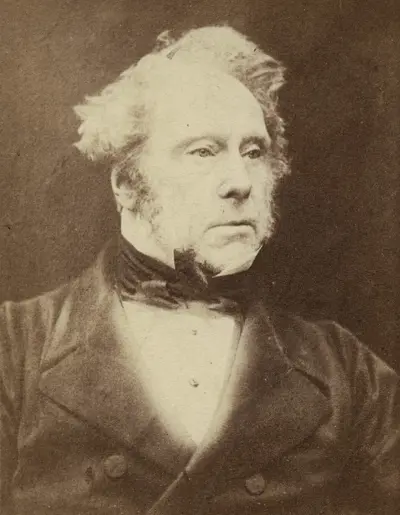
Henry John Temple, 3rd Viscount Palmerston, KG, GCB, PC, FRS was a British statesman, who was twice Prime Minister of the United Kingdom in the mid-19th century. Palmerston dominated British foreign policy during the period 1830 to 1865, when Britain stood at the height of its imperial power. He held office almost continuously from 1807 until his death in 1865. He began his parliamentary career as a Tory, defected to the Whigs in 1830, and became the first prime minister from the newly-formed Liberal Party in 1859. He was highly popular with the British public. David Brown argues "an important part of Palmerston's appeal lay in his dynamism and vigour."
