WALT WHITMAN ROSTOW
This and other quotations like {640611} and {640616} show that the State Department knew that Mobutu Sese Seko, the man we were backing in the Congo had many very undesirable characteristics for a dependable foreign ally and one who would be given control of billions of American money. Yet nothing was done and we continued to support him despite the kleptocracy and the instability that undermined his regime and the United States along with it.
The CIA was uncovering evidence that the military (and one of their key operative in Saigon) were lying about the success of the war effort. See {634521}. As the CIA sent their data to the White House, Rostow and others grew very distressed because it cast doubt on the wisdom of the administration’s Vietnam policy, the President would have to admit that his report to the people were wrong, and the anti-war movement would even be more galvanized in their aggressive protests. It is very hard for politicians to face the truth when it contradicts statement and policies they have been making previously. This quotation also illustrates a human frailty—that in a war or other conflict, the bearer of bad news is perceived as being disloyal. In war in a democracy, bad news, strengthens the enemy’s resolve, and weakens public support for the war. So in a bizarre sense, he who carries bad news is hurting the war effort. However, when the truth is not known or is suppressed, the result is even worse as with Vietnam. Telling truth to power is the highest form of loyalty.
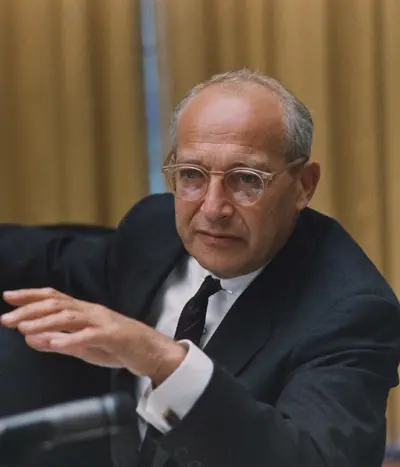
Walt Whitman Rostow (also known as Walt Rostow or W.W. Rostow) OBE was an American economist, professor and political theorist who served as National Security Advisor to President of the United States Lyndon B. Johnson from 1966 to 1969.
