Olive Schreiner Quotes
We demand that, in the strange new world that is arising alike upon the man and the woman, where nothing is as it was, and all things are assuming new shapes and new relations, that in this new world we also have our share of honored and socially useful human toil, our full half of the labor of the Children of Women. We demand nothing more than this, and we will take nothing less. That is our ‘Woman’s Right’.
Olive Schreiner, 1855–1920, South African author, anti-war campaigner, and feminist, Woman & Labour, 1911
Sourced by: Eigen's Political and Historical Quotations


This remarkable statement was written in about 1840 and there was probably then few people of either gender who would think such a thing possible.


This was a virtually unheard of idea at the time.

Given the time, this was an amazing demand. Fuller preceded all the more famous American feminists and was an inspiration to them.


She was prescient. The amendment was never ratified by enough states.


Her audiences were all familiar with the Adam & Eve Biblical narration.

This is one of the most positive statements about women and women’s rights to emanate from a leader of a Muslim Middle Eastern nation.

The Bible and the Church have been the greatest stumbling blocks in the way of women’s emancipation.
The most important documents and doctrine of most churches were created by men who also established the framework of the religion. The result has in almost all cases been a sexist structure with women having not only little power not typically females are banned from all church governance. See {640303} for her quote on religion in general vis a vis women.

This phase of American feminism was beginning but even he had no idea of how fast it would be propelled as a result of the Second World War which would begin at the end of that year.


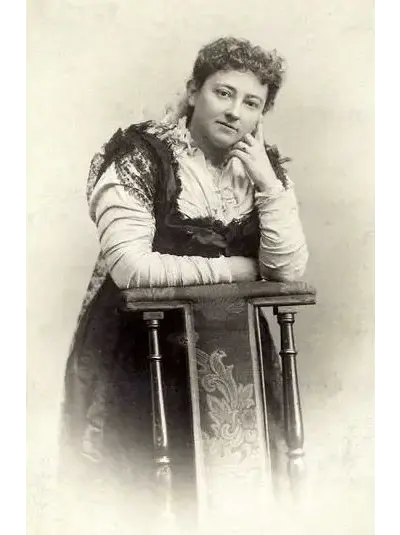
Olive Schreiner was a South African author, anti-war campaigner and intellectual. She is best remembered today for her novel The Story of an African Farm (1883), which has been highly acclaimed. It deals boldly with such contemporary issues as agnosticism, existential independence, individualism, the professional aspirations of women, and the elemental nature of life on the colonial frontier.
