Joseph Story Quotes
We are not at liberty to add one jot of power to the national government beyond what the people have granted by the constitution
Joseph Story, 1779-1845, U. S. Supreme Court Justice, Dissent, Houston v. Moore, 1820
Sourced by: Eigen's Political and Historical Quotations


In a 1949 dissenting opinion in Terminiello v. Chicago Jackson claimed the majority view would “convert the Bill of Rights into a suicide pact.”


This is a classic type of fallacious political logic. The author claims that there are no powers in the constitution to make laws in a number of important areas of our society. What is true, is that there is no explicitly and uniquely specified statements in the Constitution regarding the areas he specified (and some he didn’t like education). However the power to make laws in these areas comes from the “Commerce Clause” where the Federal Government was given the power to regulate Interstate Commerce. And that is what the Federal Government does make laws about. Food that is sold in the state where it is grown is regulated by the states. But interstate agriculture is. Medicines and weapons are also sold and transported in interstate commerce. Even housing is in part covered as financing and mortgages, building materials, working conditions of the building companies are part of Interstate Commerce. A succession of Congresses have recognized this and so has every Supreme Court in our history. McManus however believes that all these legislators and judges have been wrong and worse, part of a conspiracy to subvert the Constitution. See {630683} for his tendency to see conspiracies in politics.


Citizen of U. S. & Israel


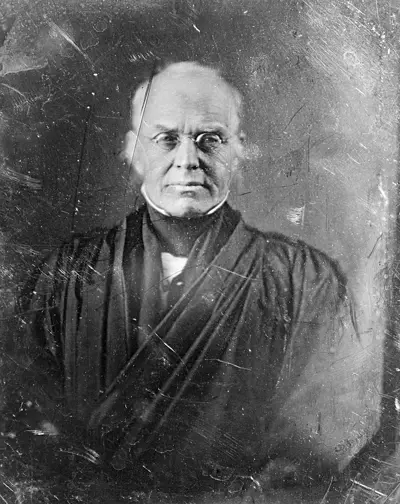
Joseph Story was an American lawyer and jurist who served on the Supreme Court of the United States from 1812 to 1845, during the Marshall Court and early-Taney Court eras. He is most remembered for his opinions in Martin v. Hunter's Lessee and The Amistad case, and especially for his magisterial Commentaries on the Constitution of the United States, first published in 1833. Dominating the field in the 19th century, this work is a cornerstone of early American jurisprudence. It is the second comprehensive treatise on the provisions of the U.S. Constitution and remains a critical source of historical information about the forming of the American republic and the early struggles to define its law.
