Annie Besant Quotes
War, infanticide, hardship, famine, disease, murder of the aged, all these are among the positive checks which keep down the increase of population among savage tribes…. Infanticide, most prevalent where means of existence are most restricted, is largely practiced among barbarous nations, the custom being due, to a large extent, to the difficulty of providing food for a large family.
There were few reformers who had such a long, extensive, and activist career in both England and India. She began her career as a minister’s wife but was literally turned out of her house by her husband for whom she was not religiously orthodox enough. This started her religious activism which ended with her as an atheist. She led a match-girl’s strike, founded a Hindu college in India, and was even arrested for pornography in England when she wrote a book advocating birth control. She is on many lists of “Great Indians” along with Gandhi and Nehru. She was Jiddu Krishnamurti’s teacher.
Annie Besant, 1847-1933, English Philosopher, Feminist, Anti-Colonialist, Journalist, Secular Humanist, Labor Organizer, & Reformer, President of The English Theosophical Society, Founder, Central Hindu College at Benaras, India, President, Indian Home Rule League & The Indian National Congress, The Law of Population
Sourced by: Eigen's Political and Historical Quotations


At the time India was the second most populous country and had a very high birth rate.

At the time, condoms and other forms of contraceptives were illegal to buy, sell, possess or own. As late as 1963 a Connecticut druggist was sentenced to jail for filling a doctor’s prescription for condoms and selling them to a married couple even thought the woman might die if she again became pregnant. The Supreme Court (Griswald v. Connecticut) established that a woman had a right to control her own reproductive cycle and the government had no business interfering with a privacy right possessed by a couple. Roe v. Wade established the right to an abortion. The same moral compunctions used with abortion were, and still are used by some to oppose any form of artificial birth control. They argued: preventing a life was as serious a moral failure as taking one. Many Catholics, many evangelical and fundamentalist protestants, and some orthodox Muslims are today morally opposed to birth control and believe that the government should ban birth control as it once was in the United States.


This was the traditional Jewish view of abortion and infanticide. It is the view of the Orthodox Jews of today, but the larger body of Reform Jews, like many Protestant sects, do not equate abortion to murder or infanticide.

The logic is that communities and areas—even countries have finite resources. Since we have a welfare society in which we will not allow people to starve, society must provide for children whose parents cannot. Therefore, individuals ought not to be allowed to breed beyond their ability to care for the children for if many would do so, the capacity of the community could be overwhelmed. A middle ground is that while the final decision should be left to the individual family, the society ought to educate and persuade members to limit their breeding.

Johnson insisted that he would not provide food to ease India’s famine until the nation adopted a family planning program including education about all methods of birth control and making available devices such as condoms to India’s poor
In Burundi, family land is divided among the male children of a family. The average Burundian woman has 6.3 children, nearly triple the international fertility rate. With this fertility rate, the plots of land for each person inevitably get smaller and smaller over time. At 10,745 square miles, Burundi is slightly smaller than the U.S. state of Maryland, but it holds nearly twice as many people: about 10 million. The small plots of land are inefficient to farm and provide subsistence. So the nation was in a crises as there was little industrialization and land was essential for existence for most Burundians. See {35808} and {35809}.


There were few reformers who had such a long, extensive, and activist career in both England and India. She began her career as a minister’s wife but was literally turned out of her house by her husband for whom she was not religiously orthodox enough. This started her religious activism which ended with her as an atheist. She led a match-girl’s strike, founded a Hindu college in India, and was even arrested for pornography in England when she wrote a book advocating birth control. She is on many lists of “Great Indians” along with Gandhi and Nehru. She was Jiddu Krishnamurti’s teacher.

The Clinton Administration decided not to issue the directive. To do so would have embroiled the administration in a huge abortion debate as the NSC has previously observed that no nation has ever reduced its population growth without using abortion as one of the techniques. India, for example, utilized both abortion and sterilization—both offensive to segments of American public opinion.

One of the most contentious activities in all political history is a government trying to regulate the number of children which its citizens can have. When a government tries to do this, they run into opposition by some religious people who oppose birth control in general or some birth control methods (eg abortion). In addition it is opposed by many people who do not want the government involved at all in a decision that is so personal. Yet many governments, under the press of perceived overpopulation, or in an effort to limit mental retardation, have attempted such regulation and that includes the United States where 40 states have at one time or another practiced forced sterilization of people who the state believed were unfit to bear children. China and India—the largest nations of the world—have both maintained government policies and practices to control population with China making it illegal to have more than 1 child. These programs have reduced the population counts, but at a terrible ethical cost and resentment of the affected people.


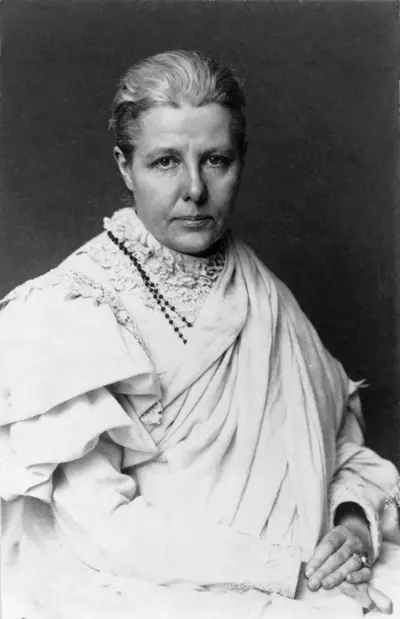
Annie Besant (née Wood; 1 October 1847 – 20 September 1933) was a British socialist, theosophist, freemason, women's rights and Home Rule activist, educationist, and campaigner for Indian nationalism. Regarded as a champion of human freedom, she was an ardent supporter of both Irish and Indian self-rule. She was also a prolific author with over three hundred books and pamphlets to her credit. As an educationist, her contributions included being one of the founders of the Banaras Hindu University. For fifteen years, Besant was a public proponent in England of atheism and scientific materialism. Besant's goal was to provide employment, better living conditions, and proper education for the poor.
