Antisthenes Quotes
Virtue is the same for women and men alike.
Antisthenes, ~445 BC-360 BC, Athenian Greek Philosopher, Quoted in Diogenes Laertius, vi
Sourced by: Eigen's Political and Historical Quotations


Jinnah was a modern Islamist who saw the role of females in a modern context. He, like the Indian Hindu leaders were in a sense products of the West and Western government and education. He would be very surprised that in his Pakistan men can murder their female relatives who they believe have dishonored the family, or that women would not be educated in the Madrassas, or that authorities could sentence a female relative of a man deemed guilty of seduction to be gang raped, but that is what happens in modern Pakistan. Jinnah and many of the early leaders believed that their new government could modernize Islam but the control and influence went the other way. Pakistan became a religiously dominated autocracy rather than the democracy that Jinnah foresaw.


See {618590} for an example of the kinds of issues which motivated her statement.


Husayn Ali Nuri. The equality of women which he proclaimed was another threat to Islam of which Bahai was a reform offshoot. Even in modern times in Iran, many Bahai are hunted down and executed.

See {640733} for an English political leader’s similar view.


Her audiences were all familiar with the Adam & Eve Biblical narration.


Abbot was apparently ignorant of the American women who did fight in the American Revolution, the War of 1812 or the Civil War where there were a few women who fought on both sides some of whom were decorated. Nor did he seem to acknowledge Joan of Arc and other female warriors in world history. But he would be truly shocked by the tens of thousands of “civilized” women who volunteered and served in the American military once they were allowed to do so and the “civilized” men who fought with them as compatriots.

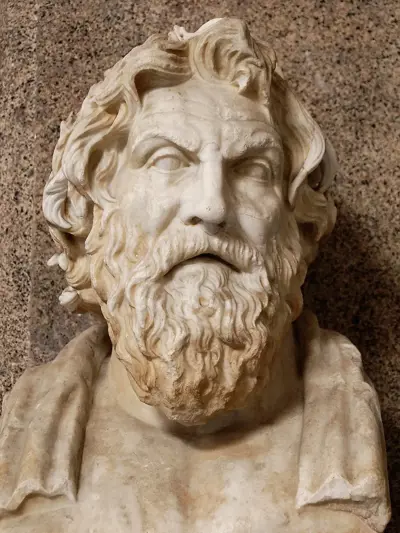
Antisthenes (/ænˈtɪsθɪniːz/; Greek: Ἀντισθένης; c. 446 – c. 366 BC) was a Greek philosopher and a pupil of Socrates. Antisthenes first learned rhetoric under Gorgias before becoming an ardent disciple of Socrates. He adopted and developed the ethical side of Socrates' teachings, advocating an ascetic life lived in accordance with virtue. Later writers regarded him as the founder of Cynic philosophy.
