Solomon Northup Quotes
Unsoundness in a slave, as well as in a horse, detracts materially from his value. If no warranty is given, a close examination is a matter of particular importance to the Negro jockey.
Northup, Solomon. Twelve Years a Slave. Derby and Miller, 1853, p. 80.


He was driving through Tennessee and some white demonstrators were carrying racist signs insulting to Blacks. A companion asked what was the cause of Southern white racism.

_0_thumbnail_47x47.jpg "A portrait of Richard Allen, a Methodist bishop and founder of the African Methodist Episcopal Church")
Many whites thought that the solution to the problem of free and emancipated Negroes was to send them to Africa. They assumed that the negroes would by desirous of that solution also, but they rarely asked them. When they did, they received answers much like this one from one of the leading Black clergymen in America.

Many social scientists believe that this is one of the reason for so much racism amongst the lower class whites. If blacks are “below” them, the poor whites have power and are not at the bottom of the sociological pyramid of society. To many this is better than being better off themselves but starring the bottom with the Negroes.

In the first part of the 18th Century, one county in Virginia became a magnet for runaway indentured servants, The more runaways settled there the more empathetic and hospitable they were to new runaway servants. The culture at the time had identified knowing your place in society and accepting it. So a runaway indentured servant had renounced their oath and contrast to serve their masters, and hence were not Christians. These renegades were armed and there was not enough political will or support for forcing the County to comply with the laws and mores of the time.

The Southeastern states were in a triple bind regarding slavery. The slave trade was ended so new slaves could not be imported. The existing slaves commanded much higher prices in the West and were sold to those destinations. Meanwhile, the European abject poverty provided a ready source of immigrants who would work for wages that were not much more than the cost of keeping and amortizing a slave. At the beginning of the Civil War, the death knell of Southeastern slavery had already been ringing.


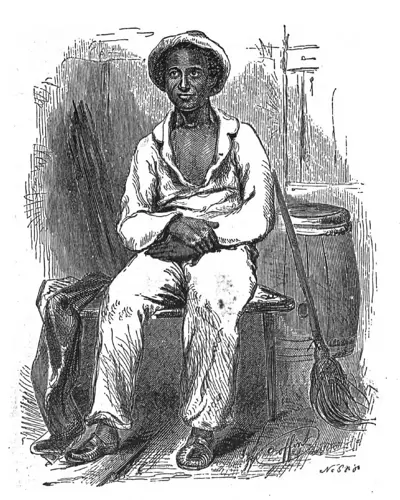
Solomon Northup was an American abolitionist and the primary author of the memoir Twelve Years a Slave. A free-born African American from New York, he was the son of a freed slave and a free woman of color. A farmer and a professional violinist, Northup had been a landowner in Hebron, New York. In 1841, he was offered a traveling musician's job and went to Washington, D.C. (where slavery was legal); there he was drugged, kidnapped, and sold as a slave. He was shipped to New Orleans, purchased by a planter, and held as a slave for 12 years in the Red River region of Louisiana, mostly in Avoyelles Parish. He remained a slave until he met a Canadian working on his plantation who helped get word to New York, where state law provided aid to free New York citizens who had been kidnapped and sold into slavery. His family and friends enlisted the aid of the Governor of New York, Washington Hunt, and Northup regained his freedom on January 3, 1853.
