Kenneth Rogoff Quotes
Unbridled capitalism will lead to some very real problems.
Rogoff, Kenneth. "SPIEGEL Interview with Economist Kenneth Rogoff: 'Marx Was Completely Wrong'." Spiegel Online, 9 Aug. 2007.


Arguably, for most of American History, most of the “smartest” people contributed to manufacturing, construction, research and development—activities that produce things that are wanted and/or needed. However, Wall Street began attracting and paying for some of the smartest people in the society, who when they engaged in finance—not only contributed less to manufacturing, but began to create highly complex financial instruments and procedures that few people could understand and with which regulators have difficulty understanding. These and the other schemes of financing have been major factors in the economic problems that have beset the economy including the meltdown of 2008 and the subsequent Great Rescission.


By producing growth and an increasing standard of living and universal education, capitalism’s citizens have the time, education, and resources to protest and produce social unrest. However, that assumes that there is also a democratic state. For Schumpeter and many others, capitalism and democracy go hand in hand, but many point to historical examples of one developing faster than the other.


Webster was taking regular bribes from large corporations and even complained when his payments were late. So he might have had a pro-large business bias. At the time taking bribes even if there was a quid pro quo was not illegal or even “unethical” by then Congressional rules.


One important observation of this quotation is the pejorative language Mises used to describe “Union Bosses” as opposed to “Union Leaders.” There were indeed a few Union “Bosses” but most unions had popularly elected leaders. It is similar to the left wing critic who refers to Corporate Executives as “Greedy Monopolists.” A few are but most are not. Historically, in the last half of the 20th century and the beginning of the 21st, the conservatives tended to be much better at pejorative language and used it more frequently and uniformly than the liberals who tended to be better in the last part of the 19th century and the first half of the 20th century.

Many of the far left grew disillusioned with the British Labor Movement and how it was relating to the capitalist companies, the government, and the workers. The Unions had become very undemocratic and controlling with the government pressuring both labor and companies to the degree that many felt that the institutions themselves were no longer free institutions. Ironically, they preferred the open competition of the American system at the time where unions and companies were free to fight out their differences.

America’s first political economist


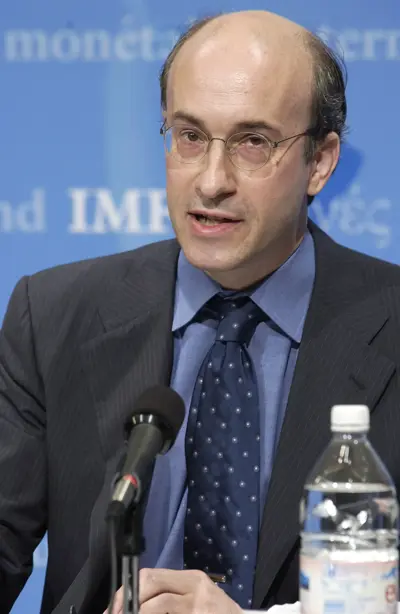
Kenneth Saul Rogoff is an American economist and chess Grandmaster. He is the Thomas D. Cabot Professor of Public Policy and Professor of Economics at Harvard University.
