Elliott Abrams Quotes
Treat cabinet officers as friends but understand that they are also enemies.
Abrams has a cynical view of government and his string ideology and abrasive style tended to create a lot of enemies for him. Many disagree with him, and especially many presidents. A president who has a member of his cabinet who is an “enemy” and retained him in office would be a very weak and foolish President.
Elliott Abrams, Assistant Secretary of State (Republican), “The Prince of the White House”, Advice to Presidents, Foreign Policy, March / April 2013
Sourced by: Eigen's Political and Historical Quotations


At that time the Israelis had been rebuffed after offing several major peace proposals and most were convinced that the Palestinians were so fractionated that no one would dare sign a peace even giving Palestinians their own state and sharing Jerusalem as the capital. So they just organized around security needs and walling Israel off from terrorist attacks while maintaining the occupation until something radially changes amongst the Palestinians. The Palestinians and the other Arabs did not want to negotiate either as they felt so weak that they believed they could never get decent terms, and they hoped for some military or terrorist victories where the Israelis would make large concessions to a strong opponent. At the same time there were a few ultra-orthodox Jews who did not want a peace and wanted to do what conquering nations had done throughout history—annex more conquered territory. There were a number of Arab groups, in addition to some Palestinians who did not want a peace at all, as for them there was no satisfactory solution so long as there was a Jewish state in their midst. See {632822} for more on the Israeli attitude then.


At the beginning of his Presidency Roosevelt urged Congress to disarm. A few years later he was urging heavy expenditures for armaments and Congress was then reluctant.

Warning of the problem of multiple contacts and negotiations with the enemy in the Vietnam War:


George W. Bush. Reference to foreign policy situations like Syria where there is a major conflict or contest between two forces, each of which is fatally flawed from an American point of view.


For years of the Arab-Israeli conflict, Palestinians would never negotiate with Israel over anything. Finally that barrier was broken and, the PLO became a negotiating party with Israel. However, the terrorist organization Hamas, had challenged the PLO for political control of the Palestinians and then took over the Gaza strip—part of the Palestinian territory. They then shot thousands of rockets into Israel, a clear act of war under international law. The Israelis then attacked the Hamas infrastructure and any building of facility where they had command or communications, meetings, trainings or stored weapons or ammunitions. The Gazans suffered many more casualties than the Israelis—about 20 to 1 ratio. Many other countries tried to broker a ceasefire which the Israelis agreed to but Hamas would not. The Israeli ambassador was asked on American television if Israel would be willing to negotiate on the larger issues of the conflict as they had negotiated with the PLO. This was his reply. The major problem was that the Hamas Charter had two clauses that made negotiations impossible. Hamas was committed to the destruction of Israel and would not agree that the Israel had a right to exist. Second, the Hamas charter called for the killing of Jews anywhere in the world—men, women and children. The Israelis asked what they would negotiate about given those two charter items and the Hamas terror history in killing as many Israelis as they could.


This treaty ended the 30 Years War where there had been decades of atrocities and abuse and a large part of both sides’ population had a personal grudge and wanted justice (vengeance). Hence the treatment of forgiveness.

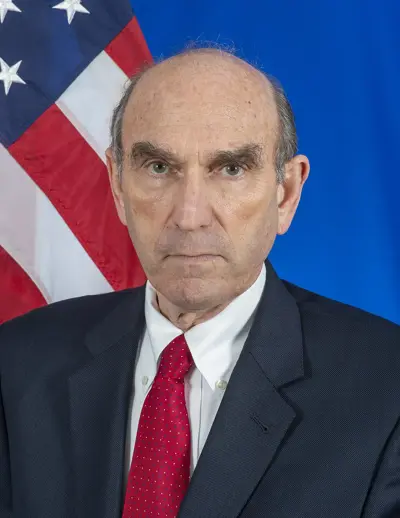
Elliott Abrams is an American politician and lawyer, who has served in foreign policy positions for Presidents Ronald Reagan, George W. Bush, and Donald Trump. Abrams is considered to be a neoconservative. He is currently a senior fellow for Middle Eastern studies at the Council on Foreign Relations. On January 25, 2019, he was appointed as Special Representative for Venezuela. On September 1, 2020, he was further appointed to concurrently serve as the U.S. Special Representative for Iran.
