Edward Augustus Freeman Quotes
To write about history or language is supposed to be within the reach of every man. To write about natural science is allowed to be within the reach only of those who have mastered the subjects on which they write.
Freeman, Edward A. "Pedigrees and Pedigree-Makers." The Contemporary Review, vol. 30, June 1877, p. 11.


Bush had advised FDR to go ahead with the research and development program to try and develop an atomic bomb. He was the only Government Official who Roosevelt discussed the idea with. At the time, Bush as a government official supervised and directed many thousands of scientists, and was one of just a few scientists who monitored and advised on the Manhattan Project to develop the Bomb. Here he is one of the first people to notice, understand and articulate the dilemma of specialization in science. To the degree it was a problem in 1945, it became a geometrically greater problem 65 years later satellites were capturing more high resolution of the universe every week than all the astronomers in the world could examine in a year. Ironically, Bush called for a type of precursor to the Internet to cope with this problem which the Internet helped with. Using computers to observe and analyze the many images helped much but all of science became weighed down with this problem of specialization and the explosion of knowledge.


Cicely Isabel Fairfield

The English Language has been in use for over 1000 years. English and English Speaking scientists have been active througout that time. Yet at the time that Wulf pointed this out, the actual word "Scientist" had been in use for less than a century.

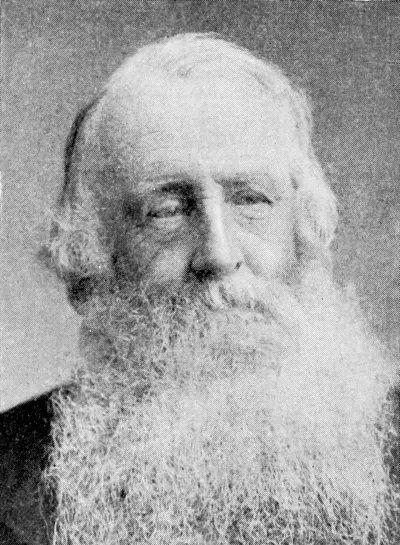
Edward Augustus Freeman was an English historian, architectural artist, and Liberal politician during the late-19th-century heyday of Prime Minister of the United Kingdom William Gladstone, as well as a one-time candidate for Parliament. He held the position of Regius Professor of Modern History at Oxford, where he tutored Arthur Evans; later he and Evans would be activists in the Balkan uprising of Bosnia and Herzegovina (1874–1878) against the Ottoman Empire. After the marriage of his daughter Margaret to Evans, he and Evans collaborated on the fourth volume of his History of Sicily. He was a prolific writer, publishing 239 distinct works. One of his best known is his magnum opus, The History of the Norman Conquest of England (published in 6 volumes, 1867–1879). Both he and Margaret died before Evans purchased the land from which he would excavate the Palace of Knossos.
