Polybius Quotes
To the senate belongs, in the first place, the sole care and management of the public money. For all returns that are brought into the treasury, as well as all the payments that are issued from it, are directed by their orders. Nor is it allowed to the quaestors to apply any part of the revenue to particular occasions as they arise, without a decree of the senate
This principle survives to this day in the United States and many other countries. Money may only be spent by the Executive Branch without the modern equivalent of “a decree of the senate”—an appropriation bill.
Polybius, c.200BC - 118 BC, Greek Historian, Rome at the End of the Punic Wars
Sourced by: Eigen's Political and Historical Quotations


1st Viscount Snowden


The Mishnah was the first written codification of ancient Jewish laws and interpretations. The Books of Moses--the first 5 Books of the Old Testament was the fundamental law--God's law. The Mishnah was a combintion of administative and policy manuals and judicial precedents.

President Jefferson in 1803, in the first instance of presidential impoundment, deferred for a few months the building of gunboats for which Congress had appropriated funds. In 1876 the President actually refused to spend the congressionally appropriated funds for river and harbor improvements in the midst of bad economic times:


Both the House and the Senate, as they got larger, developed an Appropriations Committee. When the committee assessed a departmental appropriation, they had also the responsibility for all the other departmental budgets. However, many of the members of the Appropriations Committee tended to favor the interests of their particular constituency or the special interests to which they were beholden. Other members had little or no influence. So there was immense pressure during Reconstruction to ‘share’ the appropriations ‘plum’ by creating appropriations subcommittees. However, each particular subcommittee loses the perspective of and interest in the budget as a whole. The process has led to budget imbalance pressure ever since. But Randall, the Speaker of the House warned about exactly what would happen. He had earlier served as Chairman of the Appropriations Committee, and he was exactly right.


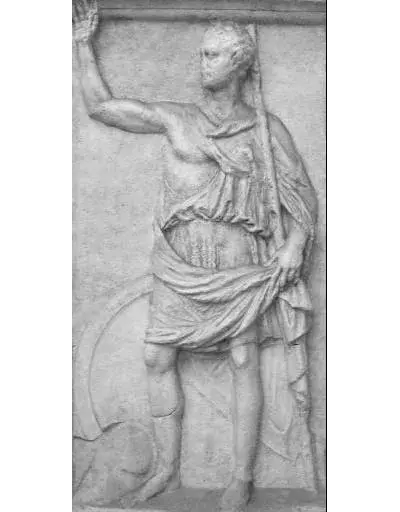
Polybius (/pəˈlɪbiəs/; Greek: Πολύβιος, Polýbios; c. 200 – c. 118 BC) was a Greek historian of the Hellenistic period noted for his work The Histories, which covered the period of 264–146 BC in detail. The work describes the rise of the Roman Republic to the status of dominance in the ancient Mediterranean world. It includes his eyewitness account of the Sack of Carthage and Corinth in 146 BC, and the Roman annexation of mainland Greece after the Achaean War.
