Polybius Quotes
To the people belongs the power of approving or rejecting laws and, which is still of greater importance, peace and war are likewise fixed by their deliberations. When any alliance is concluded, any war ended, or treaty made; to them the conditions are referred, and by them either annulled or ratified. And thus again, from a view of all these circumstances, it might with reason be imagined, that the people had engrossed the largest portion of the government, and that the state was plainly a democracy.
Polybius, c.200BC - 118 BC, Greek Historian, Rome at the End of the Punic Wars, [This was a direct democracy where these major decisions could only be decided by a plebiscite.
Sourced by: Eigen's Political and Historical Quotations


At the time Democracy as a form of government meant citizens voting for their own laws—not their representatives. Today we call that “Direct Democracy” as in a New England Town Meeting.


This was the classic, historical argument the Fascists made to justify their take over of democratic societies; the argument made by every military junta that illegally seized power; by Julius Caesar when he took control of Rome.

Chief legal officer of a Dutch town. He wanted to have a plebiscite in each town on major issues before the assembly so as to instruct the representative as to how to vote. The graphic is a painting of Adriaan van Zeebergh and his board of the Teylers Stichting.


In Dolgoff’s era, his argument was that the political parties were so powerful that it was they who controlled who held public office, not the voters. And the parties were controlled by a few party leaders. However, when the system was reformed in the latter part of the 20th century, the individual incumbent member of Congress in America was so hard to dislodge due to the role of money and the advantage of incumbency, that the class of professional politicians was still very powerful. Reform had reduced the control of political parties but not politicians.


Comment on the Election of President Putin.


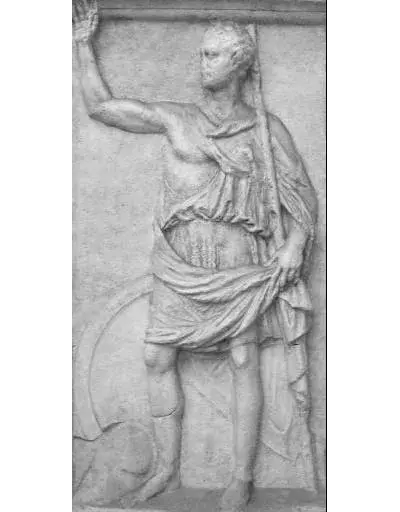
Polybius (/pəˈlɪbiəs/; Greek: Πολύβιος, Polýbios; c. 200 – c. 118 BC) was a Greek historian of the Hellenistic period noted for his work The Histories, which covered the period of 264–146 BC in detail. The work describes the rise of the Roman Republic to the status of dominance in the ancient Mediterranean world. It includes his eyewitness account of the Sack of Carthage and Corinth in 146 BC, and the Roman annexation of mainland Greece after the Achaean War.
