Henry W. Grady Quotes
To liberty and enfranchisement is as far as law can carry the Negro. The rest must be left to conscience and common sense.
Grady, representing what he called the New South pole kindly of Blacks in the North (See Quotation 643652), but gave his highly racist views to his Southern brethren—see Quotation 643649. He overtly in the North advocated liberty and the right to vote for Blacks (more than most Southerners at the time, but wanted the Federal role limited so that the enforcement of Black liberty and the voting franchise to be left to the States. And that is what occurred for the next half century. However, the state governments not only did not provide liberty and the voting franchise, the Southern States passed legislation and opted policies allowing KKK and other terror and intimidation so that Blacks would not exercise their rights to vote and be free. It is had to tell whether he was naive enough to believe that the Souther States would do what he claimed in the North or whether he not only realized what was likely to happen with the states in charge, but presented a moderate picture deliberately to keep the Federal government from interfering with the prerogative of the states to discriminate against Blacks. His racist views in his Southern speeches (for example, see quotation 643649) lead many to believe the latter view.
Henry W. Grady Speech to the New England Society of New York Delmonico's Restaurant , New York City 1886
Sourced by: Eigen's Political and Historical Quotations

Grady, a Georgian, prompted himself as a spokesman for the “New South” and while he did no advocate slavery and the brutality that had been inflicted on Southern Negroes, he was a strong white supremacist as this quotation demonstrates. He was only “liberal” compared with the total revanchist racists. However, when in the North he spoke kindly about the Negro. See Quotation 643652.


At the time, the Southern segregationists were all Democrats and they blocked any Democratic attempt to pass any Civil Rights legislation. When he could not get a Civil Rights commitment from his own party, Powell turned to the Republicans and the President wrote this letter. In return, in November, Powell endorsed and supported Eisenhower instead of Stevenson, his own party’s nominee. Eisenhower could not get any legislation on Civil Rights as the Southern Democrats would always block it. When President Lyndon Johnson finally forced the 1963 Civil Rights Act through the Congress, the racist Southern Democrats cut a deal with Goldwater and the conservative Republicans, and switched parties. Since then the Civil Rights stance of the two parties reversed. The Democrats were thereafter pro Civil Rights and the Republicans, the party of Lincoln and Reconstruction, thereafter reversed their Civil Rights position and opposed progress in this area.

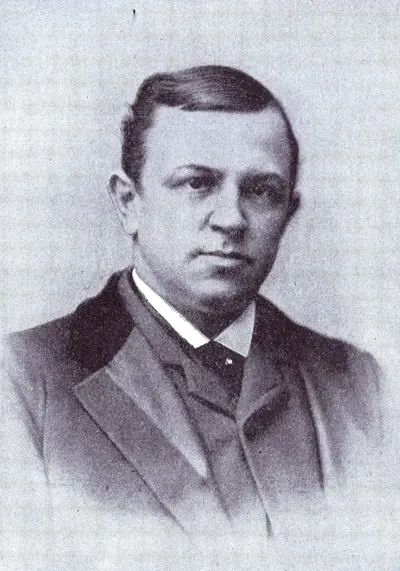
- Born: May 24, 1850
- Died: December 23, 1889
- Nationality: American
- Profession: Orator
Henry Woodfin Grady was an American journalist and orator who helped reintegrate the states of the Confederacy into the Union after the American Civil War. Grady encouraged the industrialization of the South. He was praised by contemporaries and by authors Shavin and Galphin as a civic promoter, political strategist and captivating speaker, and by Atlanta journalist Frederick Allen as a visionary. However, in current times, Grady's arguments for the need for white supremacy in the post-Civil War South have resulted in his legacy being seen nowadays as anywhere from positive, to both positive and negative, to racist and therefore negative. Grady's name has been removed from several schools including Atlanta's former Grady High School. Grady was the father-in-law of Federal Reserve Chairman Eugene Robert Black and grandfather of banker and World Bank President Eugene R. Black Sr.
