Gilbert Newton Lewis Quotes
To inquire into the origin of life is like seeking the origin of electrical machinery or the origin of music. Every increase in complexity of arrangement, of form, of substance, leads to new and often incalculable properties.
Lewis, Gilbert N. The Anatomy of Science. Yale University Press, 1926, p. 177.


He was commenting on the seemingly brilliant designs of organisms that evolution has brought about, so sophisticated, that planners could hardly have conceived of them. His point is that those organisms are the great successes which the failures have become extinct and the moderate successes have constantly gotten better.


At the time, it was very difficult for people who had been taught all their lives that God was directly responsible for the creation to accept the notion of evolution. At the time, there was not the overwhelming evidence proving Darwin’s theory that we have today. Nor did theologians realize that evolution and Darwinism were not inconsistent with the concept of a creator and supreme being. Nonetheless, there are still those who, like Agassiz, reject evolution and insist that the Biblical version of creation is literally true. See {586990}. Then there are people who have come up with the concept of Intelligent Design which originated with Agassiz though he never called it that. Most religious people today, in contrast, see no conflict in natural selection as described by Darwin and later proven, and the concept of God. They see the Biblical creation as metaphorical and natural selection as the product of an omniscient supreme being.


This particular quotation is particularly distressful to some religious fundamentalists who not only will not accept that man evolved, but find it worse to accept that man is continuously evolving.


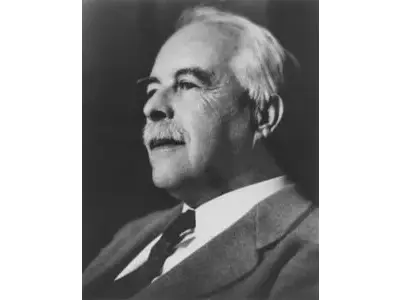
Gilbert Newton Lewis ForMemRS or (October 25, 1875 – March 23, 1946) was an American physical chemist and a Dean of the College of Chemistry at University of California, Berkeley. Lewis was best known for his discovery of the covalent bond and his concept of electron pairs; his Lewis dot structures and other contributions to valence bond theory have shaped modern theories of chemical bonding. Lewis successfully contributed to chemical thermodynamics, photochemistry, and isotope separation, and is also known for his concept of acids and bases. Lewis also researched on relativity and quantum physics, and in 1926 he coined the term "photon" for the smallest unit of radiant energy.
