Henry George Quotes
To educate men who must be condemned to poverty, is but to make them restive; to base on a state of most glaring social inequality political institutions under which men are theoretically equal, is to stand a pyramid on its apex.
Henry George, 1839-1897, Political economist, Progress and Poverty, 1879
Sourced by: Eigen's Political and Historical Quotations


He was writing about America and many of the industrial democracies who at the time, as a result of globalziation, technology, government action and inaction, and other factors, had gone through a 30 year period of increasing disparities.


The people at the upper end of the spectrum of wide inequality do not see most communal problems affecting them. As a result, they often do not participate in the attempts to solve those problems.

Most pressure for political correctness comes from the center or the left. On this area however, pressure to avoid speaking of this comes from left and right. The left is concerned that by discussing the reality the poorer performing subgroups will be stigmatized and public behavior will make the situation worse. The right would prefer that there is little or no political dialogue regarding the huge differences in outcome in America where individual ability and effort seems to play such a large part of the differential. I addition, they see the making of these distinctions as the beginning of class warfare.


He was trying to get the Democratic Presidential Nomination.


This was one of his great fundamental questions of mankind which his research began to answer.

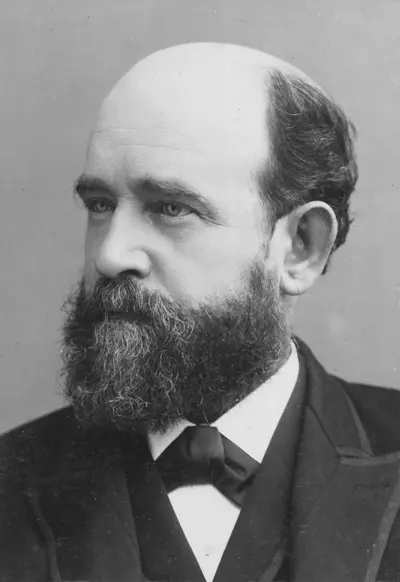
Henry George was an American political economist and journalist. His writing was immensely popular in 19th-century America and sparked several reform movements of the Progressive Era. He inspired the economic philosophy known as Georgism, the belief that people should own the value they produce themselves, but that the economic value derived from land (including natural resources) should belong equally to all members of society. He argued that a single tax on land would create a more productive, more just society.
