Friedrich Hayek Quotes
To create conditions in which competition will be as effective as possible, to prevent fraud and deception, to break up monopolies- these tasks provide a wide and unquestioned field for state activity.
Hayek, Friedrich A. The Road to Serfdom. University of Chicago Press, 1944, p. 39.


Railroads and other large markets shared dominated by a few large corporations.


This quotation illustrates one of White’s correct early grasps of what was happening in the political economy of the time and its future direction with growing industrialization and technological complexity. Most historians agree that White passed classified information to the Russians. He was accused of being a Communist, but there was never any evidence of that. Some people believe that he was a spy for the Russians and committed espionage, but others disagree observing that White was very much his own man and felt that much information that was classified never should have been. White substituted his own judgment, it is believed, about what could be given to the Russians for the security system. He was an admirer of what Russian socialism had accomplished economically, educationally and medically since the 1917 revolution deposing the Czar. Russia had been a valuable military ally, which had taken the brunt of both military and civilian casualties in WWII. White’s economics were certainly not Marxist but very much Keynesian. He was subpoenaed by the House Un-American Activities Committee where he was accused of being a Communist which he denied (see {634907}). He died of a heart attack 3 days later.

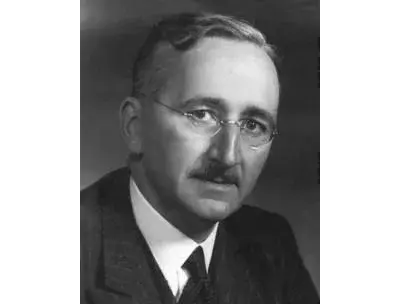
Friedrich August von Hayek CH FBA, often referred to by his initials F. A. Hayek, was an Austrian-British economist and philosopher who is best known for his defence of classical liberalism. Hayek shared the 1974 Nobel Memorial Prize in Economic Sciences with Gunnar Myrdal for his "pioneering work in the theory of money and economic fluctuations and [...] penetrating analysis of the interdependence of economic, social and institutional phenomena". His account of how changing prices communicate information that helps individuals co-ordinate their plans is widely regarded as an important achievement in economics, leading to his Nobel Prize.
