Winston Churchill Quotes
To become Prime Minister of the country at this time is nothing to be pleased about. We are beset with difficulties.
In a democracy, some politicians come to power in good or average times. Others, come to power with the nation in extremis. Churchill. Privately confided to a friend that he was not exactly happy. However, he had served as Prime Minister before and under the even more difficult conditions of WWII. In American, Abraham Lincoln, Franklin Delano Roosevelt, and Barack Obama all came to power when the nation was in great difficulty. In Lincoln’s case, there was secession and rebellion. With FDR it was the Great Depression. In Obama’s case, there were two wars and the worst economic conditions since the Great Depression, yet all 3 men did not seem to have Churchill’s misgivings.
Winston Churchill, 1874-1965, British Prime Minister (Conservative), Letter to a friend, 1951
Sourced by: Eigen's Political and Historical Quotations


When Disraeli first entered politics and tried to run for Parliament the notion that he would ever become Prime Minister was very unrealistic to everyone except Disraeli. In addition to no political experience at the time, he came from a Jewish background at a time when anti-Semitism was very common and acceptable to England. Even if he were not inexperienced and Jewish, he was not part of the British aristocracy and was not socially connected. He also had no large business and industrial connections and no important family connections. However, he was a marvelous writer and speaker, a very fast learner, and turned out to be a political natural. Most historians rate him as one of the two or three greatest British Prime Ministers.

This seems to be the first time the Latin saying, first among equals, has been applied to the British Prime Minister within the Cabinet.


Later in the Great Recession of 2008, almost everyone realized what the queen had observed years earlier.
1st Earl of Beaconsfield


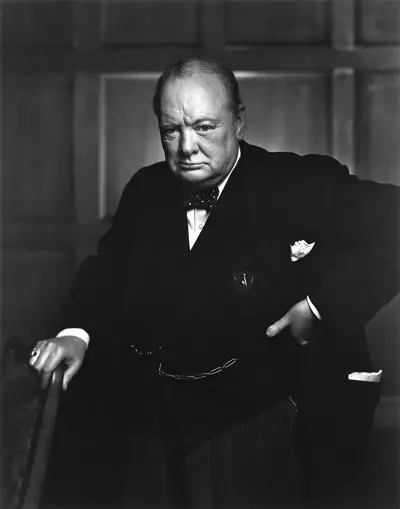
Sir Winston Leonard Spencer Churchill, KG, OM, CH, TD, DL, FRS, RA was the Prime Minister of the United Kingdom from 1940 to 1945, during the Second World War, and again from 1951 to 1955. Apart from two years between 1922 and 1924, Churchill was a Member of Parliament (MP) from 1900 to 1964 and represented a total of five constituencies. Ideologically an economic liberal and imperialist, he was for most of his career a member of the Conservative Party, as leader from 1940 to 1955. He was a member of the Liberal Party from 1904 to 1924. Churchill was also well known for his military career and as a historian, painter and writer, and among his many awards was the Nobel Prize in Literature.
