Samuel Richardson Quotes
Though a censure lies against those who are poor and proud, yet is Pride sooner to be forgiven in a poor person than in a rich one; since in the latter it is insult and arrogance; in the former, it may be a defense against temptations to dishonesty; and, if manifested on proper occasions, may indicate a natural bravery of mind, which the frowns of fortune cannot depress.
Richardson, Samuel. Pamela; or, Virtue Rewarded. Vol. 3, Printed for S. Richardson, 1742.


Battle was the grandson of a Revolutionary war soldier and the son of a former slave. He was the first person inducted into the New York City Police Force when it was first organized after the consolidation of the boroughs in 1898. He became the first Black Police Sargent and the first Black Lieutenant of the city and was probably the only Black senior police officer in the country at that time.


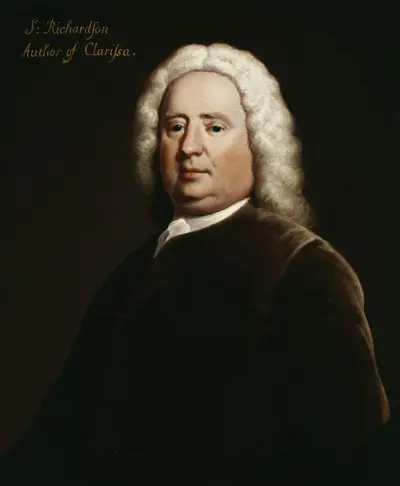
Samuel Richardson was an English writer and printer best known for three epistolary novels: Pamela; or, Virtue Rewarded (1740), Clarissa: Or the History of a Young Lady (1748) and The History of Sir Charles Grandison (1753). He printed almost 500 works during his life, including journals and magazines, working periodically with the London bookseller Andrew Millar. Richardson had been apprenticed to a printer, whose daughter he eventually married. He lost her along with five sons, but remarried and had four daughters who reached adulthood, but no male heirs to continue the print shop. As it ran down, he wrote his first novel at the age of 51 and immediately joined the popular, admired writers of his day. Leading figures he knew included Samuel Johnson and Sarah Fielding, and the eminent physician and Behmenist George Cheyne and the theologian and writer William Law, whose books he printed. At Law's request, Richardson printed some poems by John Byrom. In the literary world he rivalled Henry Fielding, and the two responded to each other's literary styles.
