Homer Quotes
Thou wilt lament
Hereafter, when the evil shall be done
And shall admit no cure.
Homer. The Iliad. Translated by William Cowper, J. Johnson, 1791, p. 235.


Lee had advised the Southern leadership to avoid secession and the war that would follow. However, the Southern leaders did not really believe that the remainder of the Nation would fight and take casualties to end the institution of slavery. While many would not, they misjudged the intensity of those who would, the moral power of the abolitionists and most Northern religious leaders. Nor did they understand the importance to most Northerners of preserving the Union. And they really had no comprehension of the industrial capability of the Northern free labor states or the importance of that in a long protracted war. Lee, more sophisticated than the other Southern leader, had a more realistic assessment, but thought that there was a chance that the South might have enough early success that the North would politically make the war untenable, but he realized the cost in men and material under the best of circumstances. Lee’s surrender came shortly afterward.


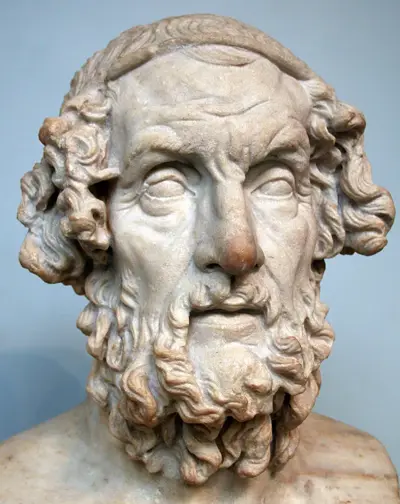
Homer (/ˈhoʊmər/; Ancient Greek: Ὅμηρος [hómɛːros], Hómēros) was the presumed author of the Iliad and the Odyssey, two epic poems that are the foundational works of ancient Greek literature. The Iliad is set during the Trojan War, the ten-year siege of the city of Troy by a coalition of Greek kingdoms. It focuses on a quarrel between King Agamemnon and the warrior Achilles lasting a few weeks during the last year of the war. The Odyssey focuses on the ten-year journey home of Odysseus, king of Ithaca, after the fall of Troy. Many accounts of Homer's life circulated in classical antiquity, the most widespread being that he was a blind bard from Ionia, a region of central coastal Anatolia in present-day Turkey. Modern scholars consider these accounts legendary.
