Aristotle Quotes
Those who excel in virtue have the best right of all to rebel, but then they are of all men the least inclined to do so.
Aristotle. Politics. Translated by Benjamin Jowett, Clarendon Press, 1885, p. 145.


Muslim League leaders wanted to stir up India's Muslims in order to prevent Indian Independence from Britain unless India were partitioned and the Muslims could have their own nation. At that point the British and the Congress Party of India—the majority political party were both starting to plan for independence. Most of the Muslim nationalists did not want to have any Muslims living in a Majority Hindu nation. To stop it, they first used fear claiming that when the British left, the Hindus would massacre all the Muslims. They galvanized the Muslims to first attack the Hindus to dissuade then from their attacks which at that point were imaginary except in the conspiracy theory of the Muslim League. The moral logic of this statement was similar, albeit not to the same bloody degree, as the famous quotation of Presidential Candidate Barry Goldwater on extremism." H. S. Suhrawardy


There were other Roman Catholics who used violence including physically attacking the Tithe Collectors. In Ireland at the time the established church—the Protestant Anglican Church of Ireland—had the legal right to collect annual Tithes from the population in order to fund the activities of the Church. One difficulty however, was that the majority of the population were Roman Catholics. The poorest of them could not afford the tithe payments to any church. Whereas in the past, the Protestant Church officials did not force the issue of tithe collection from the poor, in about 1830 they changed and seized the property of the poor (Protestants and Catholics) and auctioned it off to pay for the tithe. The Cardinal organized a campaign of non-violent civil disobedience to combat the Tithe.


He advocated no cooperation with the British Colonial Administration which depended on Indian officials, administrators, clerks and other workers. The boycott strategy never worked in this case, but civil disobedience did. Boycott did work against the apartheid regime in South Africa a half century later however.


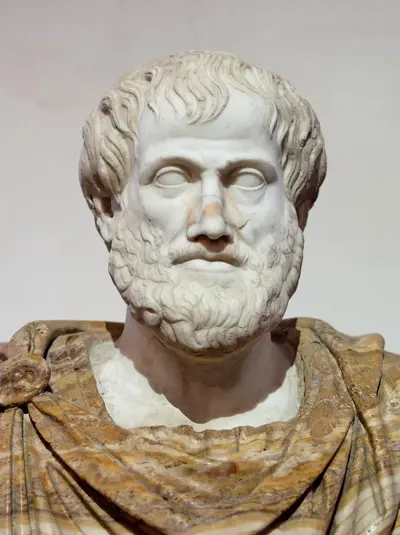
Aristotle (/ærɪˈstɒtəl/; Greek: Ἀριστοτέλης Aristotélēs, pronounced [aristotélɛːs]; 384–322 BC) was a Greek philosopher and polymath during the Classical period in Ancient Greece. Taught by Plato, he was the founder of the Lyceum, the Peripatetic school of philosophy, and the Aristotelian tradition. His writings cover many subjects including physics, biology, zoology, metaphysics, logic, ethics, aesthetics, poetry, theatre, music, rhetoric, psychology, linguistics, economics, politics, meteorology, geology and government. Aristotle provided a complex synthesis of the various philosophies existing prior to him. It was above all from his teachings that the West inherited its intellectual lexicon, as well as problems and methods of inquiry. As a result, his philosophy has exerted a unique influence on almost every form of knowledge in the West and it continues to be a subject of contemporary philosophical discussion.
