Doc Hastings Quotes
This is a form of double taxation and it's simply unfair.
Hastings, Doc. Public statement. Office of Representative Doc Hastings, 2005.

Tax Evasion is a felony. Tax avoidance is using legal loopholes to avoid paying taxes. However, as Hightower points out, every time a wealthy individual or corporation legally avoids a tax, the burden to make up for the lost revenue falls on the Middle Class for whom there are few tax loopholes. Also, they cannot afford the high-priced lawyers and accountants to find the schemes to use.


Throughout most of the world, the rich and the aristocrats have been able to reduce or eliminate their tax obligations with the burden falling more heavily on the common people. Progressive taxation was thought to be a solution, but even in the United States by the 21st century many huge corporations paid little or no taxes while there was a heavy tax burden on small companies. Rich people generally paid a smaller percentage of their income than middle class people.


Tax breaks and deductions had become so prolific and complex that most of the larger corporations paid not only a smaller percentage of taxes than many small businesses, but also paid a smaller amount.


Two decades later, in 2011, the fact that the very wealthy often paid tax at a much lower rate than the middle class and even some working poor became a major political issue.

What is interesting is at the time and today there are few politicians who would not agree completely, including all the members of Congress. Yet every word of the absurdly complex and unfair tax law was written and passed by some Congress and signed by some President. Congress could change it any time it wants to. The problem is that ut while all agree that the status quo is terrible, there is no agreement on what the correct solution would be, and any proposed change would be assaulted by the lobbyists of the special interests who benefit from the status quo. In that sense it is just like Health Care Reform. When a change is finally crafted and achieves a majority of Congress, each change has been trashed by so many vested interest that the public is not sure the reform will be better then the terrible system that existed before.


At the time, he, th richest man in America was paying a lower ta rate than his secretary, his employees and the waiter who served him lunch. The “Buffet Rule” was developed and named for him that said that wealthy people should pay a minimum rate of taxation regardless of tax credits, deductions and other means of tax avoidance.
This became known as the Buffet Principle—that the very rich should not pay a lower tax rate than the workers who make far less money than they do. President Barack Obama used this principle by name in calling for the 2011 Jobs Act which would eliminate some of the loopholes and exemptions by which the rich could avoid some or much or their tax obligation.

While the majority of the country approve of a financial transaction tax on the stock market, the financial industry has always fought it tooth and nail. It was a long tradition that the Barons and leading aristocrats lands were exempt from the taxes of the king, the most powerful forces in a democracy have lobbied to avoid taxation on their enterprises and finance is one of the very few business areas that have avoided taxation in America. Other than not liking taxes in general, Wall Street and the Banks argue that many financial transactions involve buying and selling securities in huge volume and making a tiny percentage on each share. If there were a tax of even a fraction of one percent, all these profitable trades would become unprofitable. Critics argue that that kind of speculating does not help the economy at all, and is what makes the discriminatory, unfair, computer trading possible and it would be a good reform to make that kind of trading unprofitable as more than 99 percent of the people cannot participate in it nor profit from it.


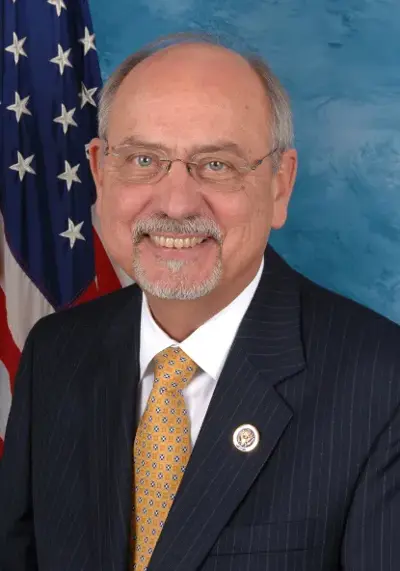
Richard Norman Hastings is an American politician and member of the Republican Party who served as the U.S. Representative for Washington's 4th congressional district from 1995 until his retirement in 2015. The district includes much of central Washington including the Tri-Cities, Yakima, and Moses Lake. The most conservative Republican in Washington's Congressional delegation, he chaired the House Committee on Ethics from 2005 to 2007 and chaired the House Committee on Natural Resources from 2011 to his leaving office.
