Greg Thielmann Quotes
They were cherry-picking the information that we provided to use whatever pieces of it that fit their overall interpretation. Worse than that, they were dropping qualifiers and distorting some of the information that we provided to make it seem even more alarmist and dangerous than the information that we were giving them.
Greg Thielmann, State Department Proliferation Expert, Referring to the Bush administration’s handling of intelligence information before the Iraq war, Quoted in Thomas E. Ricks, Fiasco-The American Military Adventure in Iraq
Sourced by: Eigen's Political and Historical Quotations

After the invasion, much of the intelligence upon which America relied on Invading Iraq turned out to be completely wrong. It turned out that the Vice President at least, a major supporter of the invasion, had a role in “shaping” the intelligence and analysis to achieve a policy objective.


See {115604} for a similar sentiment from England.


The then CIA Director, Allen Dulles, fostered a practice of “adjusting” intelligence reports to support ideological policies and theories that were then in vogue. The agents in the field knew what was wanted and many adjusted their reports to coincide with the overall intelligence and policy. The station chiefs and other supervisors often ignored reports of their agents that they knew were not exactly accurate. Copeland however, just fabricated reports and “information” from sources. The honesty and integrity of the CIA intelligence operations have varied from time to time and depended much on the CIA Director at the time. Allen Dulles, though brilliant and able, fostered an ideological intelligence agency. He even went so far as to lie to the President on several occasions.

_0_PostageStamp_47x47.jpg "Chairman of the Joint Chiefs of Staff Navy Adm. Mike Mullen gives an interview to John Dickerson during the CBS news program Face the Nation in Washington, D.C., July 5, 2009. During the interview, Mullen discussed the wars in Iraq and Afghanistan, North Korea's recent missile tests and his recent visit to Russia. (DoD photo by Mass Communication Specialist 1st Class Chad J. McNeeley, U.S. Navy/Released)")


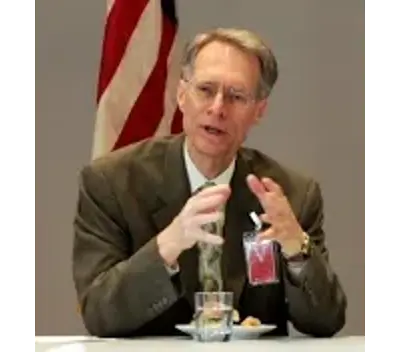
A. Gregory Thielmann is a former mid-level official in the U.S. State Department's Bureau of Intelligence and Research who, after retiring in September 2002, publicly disputed the rationale for the U.S. invasion of Iraq offered by the George W. Bush administration. He is currently a board member of the Arms Control Association and member of the Council on Foreign Relations. His areas of expertise and research include threat assessments, nuclear/missile proliferation, and US-Russian strategic arms control.
