Claudette Colvin Quotes
There was segregation everywhere. The churches, buses and schools were all segregated and you couldn't even go into the same restaurants.
Hoose, Phillip. Claudette Colvin: Twice Toward Justice. Farrar, Straus and Giroux, 2009, p. 11.


The statement was made even more dramatic as the outgoing Governor, Lester Mattox, standing behind Carter at the ceremony, was an arch segregationist.


Booth was the younger son of a very prominent Northern family of actors. His older brother was considered the greatest American actor, and the rest of the family were abolitionists and vehement Union supporters. They found young John’s views reprehensible.

Reconstruction was the period in the South after the Civil War. The change that emancipation brought to the white South was traumatic, and there was a constant struggle between those who wanted the Blacks to be integrated into Southern Society—and those Southerners who wanted to create a society that would be as close to slavery as possible, So the Klu Klux Klan and other terrorist organizations formed and with lynching and other intimidation, much of the initial progress of Reconstruction was rolled back and did not get reinstated until the Civil Rights and Voting Rights Acts were passed in 1964.

The all white regular Mississippi Delegation was selected in elections where Blacks were barred from voting although Blacks were in the majority in Mississippi. In addition, the regular party was advocating obstructing the Supreme Court school integration decisions and the Civil Rights Act that had just been passed. See {637616}. The insurgent group was selected in integrated elections, contained black and white delegates, and was pledged to support and obey the laws. The President could not make the decision unilaterally, but had a great deal of influence.


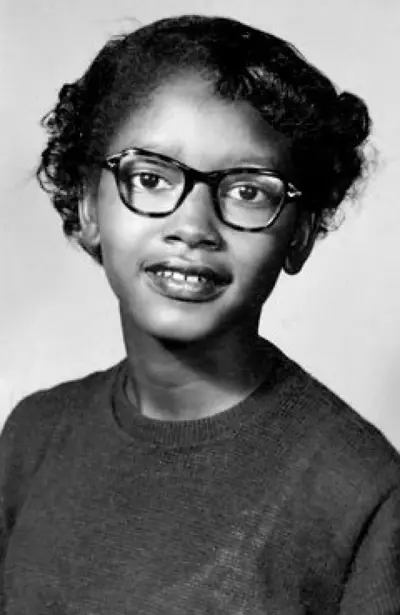
Claudette Colvin is a pioneer of the 1950s civil rights movement and retired nurse aide. On March 2, 1955, she was arrested at the age of 15 in Montgomery, Alabama, for refusing to give up her seat to a white woman on a crowded, segregated bus. This occurred nine months before the more widely known incident in which Rosa Parks, secretary of the local chapter of the National Association for the Advancement of Colored People (NAACP), helped spark the 1955 Montgomery bus boycott.
