Alexander Pope Quotes
There is nothing wanting to make all rational and disinterested people in the world of one religion, but that they should talk together every day.
Pope, Alexander. "Thoughts on Various Subjects." Miscellanies in Prose and Verse, vol. 2, Benjamin Motte, 1727, p. 359.


The people of the Book refers to Jews and Muslims. This passage of the Koran is used to justify ecumenism with Muslims integrated with Jews and Christians. The Koran consists of Muhammed’s sayings, and he himself had opinions about Jews and Christians that differed from time to time. So although this passage signals a tolerant religion, in other places Muhammed preached violence against the people of the Book. At first Muhammed and his followers expected to see the people of the Book adopt Islam as their religion. When they did not, relations deteriorated somewhat.


In some countries political candidates run on religious platforms to convert the part of the population that is not of their religion and turn the nation into a theocracy.

Kung wrote against the infallibility of the Pope and was not allowed to teach as a Catholic.


The major religions differ when it comes to conversion. Buddhism, Judaism, Hinduism, and some Christian Religions do not aggressively seek converts but will accept converts who come themselves. Other Christian religions and Islam aggressively try and convert others and see it as their religious duty to do so.


“Africa” then meant Northern Africa or what we today call the Middle East. Even in the 4th century it was a hotbed of internecine religious strife. He was not the first to try and cope with the religious strife of Palestine and the rest of the Middle East, and he was certainly not the last.


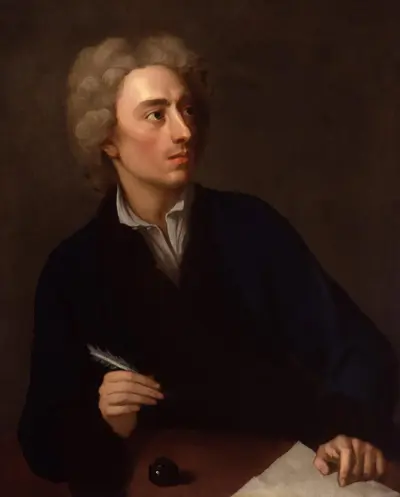
Alexander Pope is seen as one of the greatest English poets and the foremost poet of the early 18th century. He is best known for satirical and discursive poetry, including The Rape of the Lock, The Dunciad, and An Essay on Criticism, and for his translation of Homer. After Shakespeare, Pope is the second-most quoted writer in English, according to The Oxford Dictionary of Quotations, some of his verses having become popular in common parlance (e. g., damning with faint praise). He is considered a master of the heroic couplet.
