Francis Bacon Quotes
… there is not anything, amongst civil affairs, more subject to error than the right valuation and true judgment concerning the power and forces of an estate…. Walled towns, stored arsenals and armouries, goodly races of horses, chariots of war, elephants, ordnance, artillery, and the like, all this is but a sheep in a lion’s skin, except the breed and disposition of the people be stout and warlike.
1st Baron Verulam. The word “estate’ meant a political unit or subunit. These might be ruled by kings, dukes, war lords, etc. However, Bacon’s point was all armaments and the physical trappings of war are relatively minor when compared to the qualities of the population. With modern technology, this principle has become less and less true. Given the same technology in war, the outcome will depend on the human qualities and warlike disposition of the humans. However, a modern force with modern equipment and weapons can defeat an enemy of braver and more warlike disposition which does not have the same technology. In the modern world, a number of cultures find this a very distressing reality. The noble and courageous man should win, but Western technology, many complain, is undermining the old, traditional virtues.
Francis Bacon, 1561-1626, Lord Chancellor of England, Essay XXX: Of the True Greatness of Kingdoms and Estates
Sourced by: Eigen's Political and Historical Quotations

Just 7 months earlier the King had made a direct appeal to the people for enlistment in the military—See {587166}. The response was very good, but the First World War developed in such a way that huge manpower resources were needed and the King had to reluctantly assent to a military draft.

There is a , romantic American myth about the Militiamen in Colonial and Revolutionary America—the citizen soldiers who would leave their farms and rise to the military necessity of the day. However, not only were the militia very hard to muster to duty, but most actually didn’t own or have experience with firearms, and the prevailing opinion of knowledgeable military leaders from George Washington on down was that the militia were not very good soldiers. See {613015}, {613016}, {613022}, {613027}, {621987}, {621988}, {613030}, {613033}, & {613056}

While the militia had very few arms, Van Rensselaer had no military training and commanded a critical army because of his political connections—common at the time. After he botched the Battle of Queenston Heights he returned to politics but his military failure dogged him for the rest of his career. The quotation is yet another that illustrated the myth of all Americans armed and ready to fight for the nation. There was no gun culture then, and guns were expensive and a minority of Americans owned them. In this case less than 20 percent of the American militia owned a gun. And Congress would just not at the time spend the money for weapons.


See Napoleon Bonaparte for a similar view.


He wrote this essay anonymously and signed it as “A Lover Of Peace”


1st Earl of Beaconsfield

This was the earliest version of a variant of the great WWII propaganda phrase, “Arsenal of Democracy”. See --{624746} and {624747} for quotations related to this famous phrase.


Much of the Chinese military had been distracted from military readiness in favor of political, economic, and ceremonial, activity along with extensive economic corruption. The People’s Liberation Army is a major political force in China which made this a very noteworthy chastisement. Leading Generals were with him however. See {632518}.


Mao and other Chinese leaders molded the people into an Army to fight the invading Japanese in WWII after which they were attacked by Chiang Kai-shek’s Nationalists. In a remarkable trek of escape the Communists moved across China to escape the nationalists while the Red Army provided protection. Without the Red Army, the Communists would easily have been overrun then and after the Nationalists “escaped” to Taiwan they planned and threatened to invade the mainland. It was the Red Army that kept them at bay, and so the “People’s Army” has an emotional, historical and intellectual impact and role even in 21st Century China when there really are no enemies that would attack China.
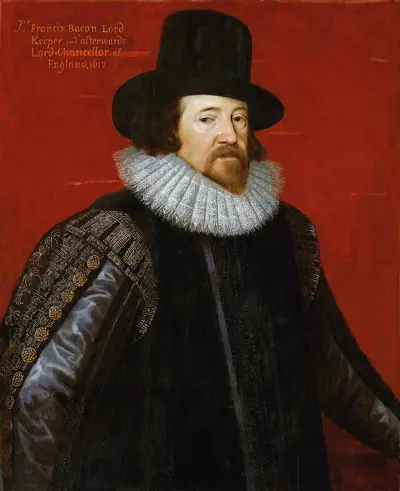
Francis Bacon, 1st Viscount St Alban, Kt PC QC, also known as Lord Verulam, was an English philosopher and statesman who served as Attorney General and as Lord Chancellor of England. His works are seen as developing the scientific method and remained influential through the scientific revolution.
