George Herbert Quotes
All the Armes of England will not arme feare.
Herbert, George. Outlandish Proverbs, Selected by Mr. G.H. T.D. for Humphrey Blunden, 1640.


There was deep hostility and suspicion between Germany and England for several years before WWI. See {642066}.


Greek invaders were marching on Istanbul


During the presidential debates George W. Bush stated that he would be very hesitant to use the military for nation building around the world. Less than a year later, the Bush administration, faced with the September 11, 2001 terrorist attacks, launched a massive attack on the Taliban regime in Afghanistan. After fighting and winning the war, the military soon realized that they would in fact be involved in nation building. However, with the assistance of the United Nations much of the humanitarian burden was lifted from the U.S. military.


1st Baron Verulam. The word “estate’ meant a political unit or subunit. These might be ruled by kings, dukes, war lords, etc. However, Bacon’s point was all armaments and the physical trappings of war are relatively minor when compared to the qualities of the population. With modern technology, this principle has become less and less true. Given the same technology in war, the outcome will depend on the human qualities and warlike disposition of the humans. However, a modern force with modern equipment and weapons can defeat an enemy of braver and more warlike disposition which does not have the same technology. In the modern world, a number of cultures find this a very distressing reality. The noble and courageous man should win, but Western technology, many complain, is undermining the old, traditional virtues.
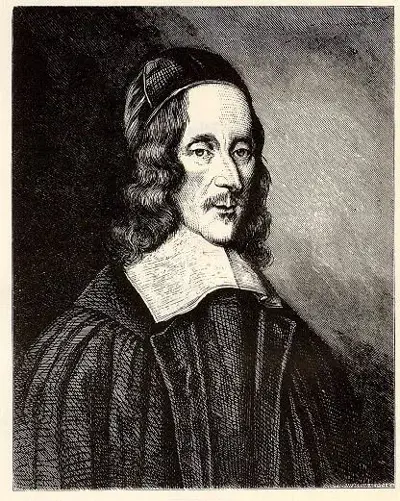
George Herbert was a Welsh-born poet, orator, and priest of the Church of England. His poetry is associated with the writings of the metaphysical poets, and he is recognised as "one of the foremost British devotional lyricists." He was born into an artistic and wealthy family and largely raised in England. He received a good education that led to his admission to Trinity College, Cambridge, in 1609. He went there with the intention of becoming a priest, but he became the University's Public Orator and attracted the attention of King James I. He served in the Parliament of England in 1624 and briefly in 1625.
