Ursula K. Le Guin Quotes
There is no information about corporations. There is only disinformation.
Le Guin, Ursula K. Dancing at the Edge of the World: Thoughts on Words, Women, Places. Grove Press, 1989.


1st Baron Thurlow. This famous statement expressed the great concern and distrust that England had for corporations. Their worst fears were exceeded by the 20th century and was completely over the top by the 21st century when many corporations could control entire nations and even in America and the UK, they were very powerful and often acted against the public and even national interest with impunity. The chancellor was very concerned as to how the behavior of corporations would be controlled and regulated. For individuals, there was a combination of conscience and legal punishment to control behavior. Partnerships were an extension of individuals. But what was the corresponding mechanism for corporations? The same question is often asked in modern times when corporate scandals and excesses are brought to light. See {586120} for another version of this concern that was stated a few generations later.


Romney was trying to explain that the Supreme Court had recently ruled that for purposes of placing limits on campaign donations, corporations were entitled to the same rights of free speech and contributing money as people. The candidate chose this statement to express that view. However, the way Romney phrased it made many people suspect that perhaps, because of his lifetime corporate activity, he really thought that there were no differences between corporations and people. This suspicion reinforced a public feeling that Romney was much more corporately oriented than he was people oriented, and that hurt Romney with many voters.


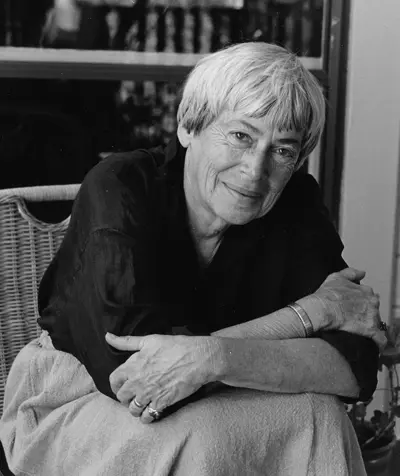
Ursula Kroeber Le Guin was an American author best known for her works of speculative fiction, including science fiction works set in her Hainish universe, and the Earthsea fantasy series. She was first published in 1959, and her literary career spanned nearly sixty years, yielding more than twenty novels and over a hundred short stories, in addition to poetry, literary criticism, translations, and children's books. Frequently described as an author of science fiction, Le Guin has also been called a "major voice in American Letters". Le Guin herself said she would prefer to be known as an "American novelist".
