William Hazlitt Quotes
They [corporations] feel neither shame, remorse, gratitude, nor goodwill.
Hazlitt, William. Table-Talk; or, Original Essays. Vol. 2, Henry Colburn and Co., 1822.


A constant major issue in industrial democracies are the perceptions, rights and responsibilities of corporations. For those like Romney, corporations should have all the privileges, empathy, rights and obligations of individual people. To most others a corporation is morally and practically a different entity. See {586119}.

Romney was trying to explain that the Supreme Court had recently ruled that for purposes of placing limits on campaign donations, corporations were entitled to the same rights of free speech and contributing money as people. The candidate chose this statement to express that view. However, the way Romney phrased it made many people suspect that perhaps, because of his lifetime corporate activity, he really thought that there were no differences between corporations and people. This suspicion reinforced a public feeling that Romney was much more corporately oriented than he was people oriented, and that hurt Romney with many voters.


McCain held this view despite the fact that most other politicians of his party supported removal of any corporate restraints.

This is the definition of good business that most conservative a business interests prefer. They do not wish to differentiate among the businesses nor do they wish to imply that businesses have any other obligations or desirable characteristics. By this definition, a business that makes money producing adult pornography is as good as one that develops pharmaceuticals; one that creates well paying jobs is as good as one that creates minimum wage jobs or even exports jobs overseas. Complying with the law in a democracy has never been a definition of good citizenship. It is a minimum duty to which all are obliged some businesses enhance the quality of life; others diminish it. This is where many differ with Mr. Longworth.

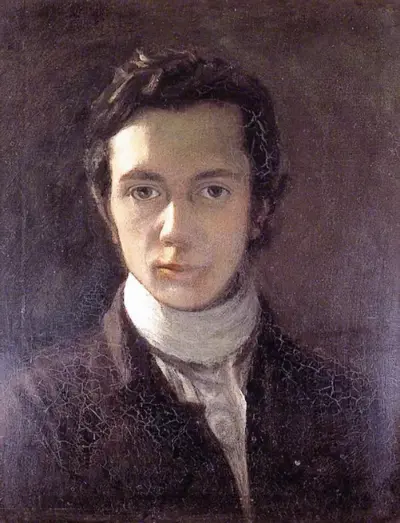
William Hazlitt was an English essayist, drama and literary critic, painter, social commentator, and philosopher. He is now considered one of the greatest critics and essayists in the history of the English language, placed in the company of Samuel Johnson and George Orwell. He is also acknowledged as the finest art critic of his age. Despite his high standing among historians of literature and art, his work is currently little read and mostly out of print.
