George Bancroft Quotes
There is more danger from monopolies than from combinations of workingmen [unions.]
George Bancroft, 1800-1891, Historian & U. S. Secretary of the Navy, Quoted in The Boston Courier, October 22, 1834
Sourced by: Eigen's Political and Historical Quotations


While this statement seems totally absurd to us today, at the time most politicians and judges believed it. Only the left wingers and the populists opposed the doctrine as well as most business owners who knew the truth but of course most preferred the have their own monopoly. One of the reasons the large American corporations did not want Jewish and Chinese immigrants is that those cultures supported highly competitive businesses and might give consumers a better deal or worse, their culture would argue for less monopoly and more competition. For more than half a century AT&T was given a monopoly over almost all telephone service in the United States. Finally the Federal Courts saw through the company propaganda, and ordered AT&T broken up. The “Baby Bells” have persuaded most state legislatures and regulatory bodies of this same argument, and almost every community of the United States has a monopoly on local wired local telephone service. The same is true about water and electricity and a great deal of American transportation. Every major company strives for as much of a monopolistic position the government will allow; some are overt like the electrical companies. Others are more subtle and use copyright and patents to be sure that there is no price or service competition. Fortunately, the high tech industry is to technologically competitive that prices have been have been going down constantly not like telephone and Internet connectivity, entertainment, education, and professional services.

One important observation of this quotation is the pejorative language Mises used to describe “Union Bosses” as opposed to “Union Leaders.” There were indeed a few Union “Bosses” but most unions had popularly elected leaders. It is similar to the left wing critic who refers to Corporate Executives as “Greedy Monopolists.” A few are but most are not. Historically, in the last half of the 20th century and the beginning of the 21st, the conservatives tended to be much better at pejorative language and used it more frequently and uniformly than the liberals who tended to be better in the last part of the 19th century and the first half of the 20th century.


She was then the European Commissioner for Competition.
She was then the European Commissioner for Competition.

She was then the European Commissioner for Competition


At the time, the NYC subway was operated by a private companies. Quill worked for the largest, the Interboro Rapid Transit Company. Quill organized the workers and forced major changes in the system.


The President and his new appointee were half joking but many of the large corporations were attacking the new department and its head frequently. The extreme conservatives used the technique of personally discrediting the head of the agency to discredit the agency and its activities. The President himself was so popular that they did not dare attack him.
The President had decided to aggressively push for railroad regulation to end the rate rebate abuses that were used to support the monopolies like Standard Oil. In vintage Roosevelt tactics, he gave his first major speech on the subject in the setting and forum that would be most opposed to it. The Union League Club of Philadelphia in included the wealthiest men in the area where were most opposed to any Federal Regulation of anything. All the major railroad executives and stock owners and traders were also members. The President wanted to persuade the opponents to change their positions, and sometimes he did. He also was driven by his concept of sports and athletics so that the “opposition” should have “fair notice” for the contest ahead.
Roosevelt shocked the conservative members of his own party with this statement. Labor unions were not then an accepted concept in American society. Anti trust legislation and enforcement was in its infancy and companies in an industry commonly conspired as to price fixing, labor negotiations and market share allocations. TR had a scrupulous sense of fairness and equity.

Ironically, this view was also held by many of the capitalist “Captains of American Industry” who believed that all unions were revolutionist regardless of the views of the union’s membership or leadership. Even today, there are some who still equate trade unionism with communism and revolution. The majority of the unions and the left never believed that, but the extreme communists and extreme capitalists did than and some do today.


This is one of the classic labor-management problems. It can be solved by legislating minimum wages, having very strong labor unions, that can pressure all the employers of an industry at once, or to have industrial unions as they do in Germany.
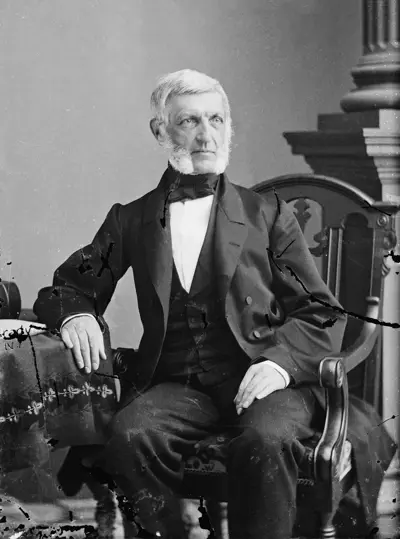
George Bancroft was an American historian and statesman who was prominent in promoting secondary education both in his home state and at the national and international levels. During his tenure as U.S. Secretary of the Navy, he established the United States Naval Academy at Annapolis in 1845. He was a senior American diplomat in Europe. Among his best-known writings is the magisterial series, History of the United States, from the Discovery of the American Continent.
