John Stuart Mill Quotes
There is a limit to the legitimate interference of collective opinion with individual independence; and to find that limit, and maintain it against encroachment, is as indispensable to a good condition of human affairs, as protection against political despotism.
John Stuart Mill, 1806-1873, Member of Parliament, British Political Economist, On Liberty, 1859
Sourced by: Eigen's Political and Historical Quotations

While this was a strong central political principle for Reagan, a substantial part of his political party strongly advocated the against the government interjecting itself into people’s lives.


He was one of a Eugenics movement advocates who advocated forced sterilization of mentally retarded and other people, something that a century later was anathema to most Americans.


This was a criticism of most Republicans who generally claimed that they were against big government and government interference. Except however, they tended to support strong government interference about abortion, contraception, and other issues involving women’s control over their bodies. The Republicans mostly favored government prohibiting personal drug taking, couples right to divorce, right to marry, homosexual behavior, the right to die and other personal issues. However, Frank, who espoused government non-interference in these areas, was one of the strongest advocates in Congress for government interference with business and commercial activities.


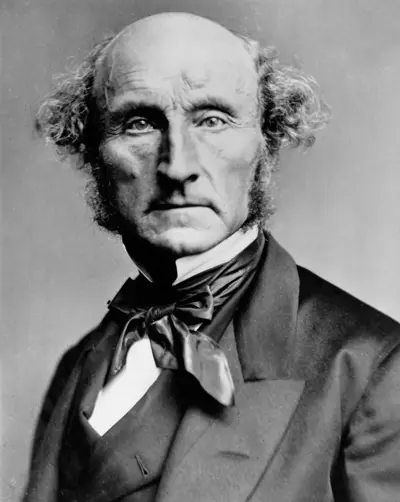
John Stuart Mill, usually cited as J. S. Mill, was an English philosopher, political economist, Member of Parliament, and civil servant. One of the most influential thinkers in the history of classical liberalism, he contributed widely to social theory, political theory, and political economy. Dubbed "the most influential English-speaking philosopher of the nineteenth century", he conceived of liberty as justifying the freedom of the individual in opposition to unlimited state and social control.
