Francisco Giner de los Rios Quotes
There is a generation or two of intelligent people … Then comes a political catastrophe, and we have to begin all over again. We are so deeply divided between Catholics and liberals, right wing and left, that one-half can never profit by the knowledge and achievements of the other.
Francisco Giner de los Rios, 1839-1915, Spanish intellectual, Quoted in Williams, The Story of Spain
Sourced by: Eigen's Political and Historical Quotations

What if you are a conservative in a liberal environment? Then what you are conserving is liberalism.
His reference was to his experience as an undergraduate at Dartmouth, which he and associates views as a liberal organization, while others viewed it as a conservative bastion of the establishment.


Agree resigned from the CIA in protest to its political positions.


So far as he was concerned, Republican moderates—his own party members—were liberals. Anyone who did not support the extreme Conservative agenda, was an enemy and a liberal. He and the Tea Party drove almost all the moderate Republicans out of the party.


Actually, there have been “paranoid” fear of opposition political viewpoints in America very often. In the early days of the Republic, the Federalists main concern was not England or other foreign enemies, but Jefferson’s Democratic Republicans. And those Jeffersonians were absolutely convinced that the greatest danger to America was the Federalists who would bring back a monarchy if they could. The Jacksonians triggered a similar polarization. The Civil War stemmed from this extreme. Even America’s most popular President, Franklin Delano Roosevelt, who was elected to 4 successive terms, was perceived as the major “enemy” of America along with his wife Eleanor and the other New Dealers.


He had invited Ted Kennedy to also give a presentation at the library, and this was part of the introduction. The President rarely “jumped” on anyone, but he was referring to the common practice of his fellow Republicans of using Kennedy as the villain in fundraising and partisan attacks.


Over time, this has been a good description of the difference between the Democratic and Republican parties.

Kennedy was dining with Time Magazine publisher Henry Luce soliciting support for JFK's presidential candidacy. Luce observed that JFK to obtain the Democratic nomination would have left-of-center domestic policies. Luce was right and the father, wrong.

After Roosevelt, most eras of American politics more or less followed the pattern Roosevelt described herein as a “calamity”, with the anger becoming more or less intense. Jefferson thought that these were natural divisions of politics in all societies--{604810}. The thing that masked this for years was race and slavery. In Lincoln’s time there were liberals and conservatives in both parties if race were ignored. In Theodore Roosevelt’s era, he, Taft and others were generally liberal reformers, while a large number of Republicans were conservative supporters of the status quo. Some democrats were radical reformers like William Jennings Bryan while others were arch conservatives. Until 1964 and the Civil Rights Act there were many conservatives in the Democratic Party, but almost all switched to the Republican Party in anger. The Republican conservatives tended to drive the Republican liberals out of the party and for the last part of the 20th century Roosevelt’s “calamity” well described the American political scene, and the anger increased carrying partisan bitterness into the 21st century.


The Republicans in the previous decades had gone so far to the right and were so opposed to anything the government might do, that they could not support anything that might be constructive for the country if it might look like the Government was capable of something positive. They accomplished almost nothing as a result, and the nation was gridlocked.


The term “Chicken Hawk” was also used by Ron Paul in the Republican Presidential Nomination Debates in 2012. Of the 8 candidates in the debate, he was the only one opposed to military intervention abroad and he was the only candidate who had served in the military. Many Chicken Hawks not only never served but applied for deferments and used other techniques to avoid military service. The origin of the term is uncertain but it entered print in the late 1980s and was applies to Vice President Dan Quayle why was a strong war supporter but had used family connections to gain admission to the Indiana National Guard and thus avoid service in the Vietnam War,
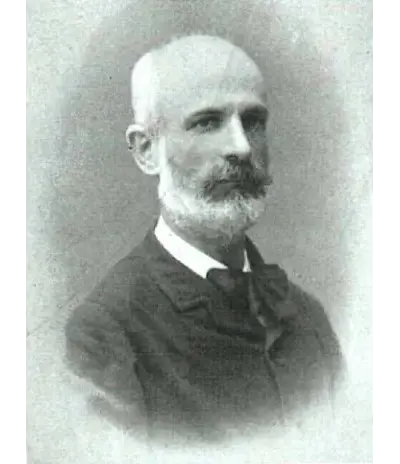
Francisco Giner de los Ríos was a philosopher, educator and one of the most influential Spanish intellectuals at the end of the 19th and the beginning of the 20th century.
