Hugh Simons Gibson Quotes
There can be no real federal state except when all elements of the people are united by a common patriotism. If there is no diversity federalism is unnecessary. If there is no common patriotism, federalism is dangerous because it is bound to result in the separatism of certain elements.
Hugh Simons Gibson, 1883–1954, Diplomat, Writer & Editor, U. S. Minister Plenipotentiary to Poland, “Switzerland's Position in Europe”, Foreign Affairs, October 1925
Sourced by: Eigen's Political and Historical Quotations


After Independence, the original credo of the Indonesian hero and leader was slowly ignored. The Muslim majority established Islam as the dominant religion and began to create laws that discriminated against Christians, Hindus, Buddhists, and Jews. The ethnic Chinese had been very successful in business and commerce and soon they were discriminated against and even physically attacked in Pogroms.


After defeating the Federalists, Jefferson tried to unite a politically divided and fractious country:

Many wonder why Bolivar did not attempt to unify much of South America into a single federated state once they had thrown off the yoke of Spanish colonialism. This was his reason.


This quotation is very important in that this is the first record that Lincoln had any doubts that he might not be able to preserve the Union.


Even in modern times many politicians the world over agree with Davis’s point that for a government to function well, the nation must have a homogenous citizenship. This is especially true of dictatorships where control of a uniform culture and populous is easier than if it is diverse nation. In modern times, the three greatest economic and scientific powers, the United States, The Soviet Union, and China were and are multicultural societies with different ethnicities, races, religions, and cultures among their sitizenry.
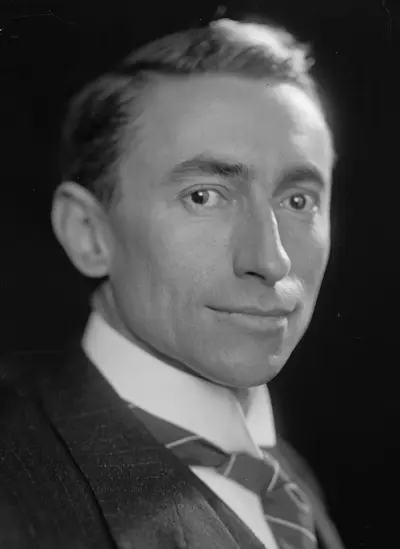
Hugh Simons Gibson was an American diplomat. He was actively involved in disarmament talks from 1925 to 1932. Throughout his career, he remained a leading proponent in the drive to establish a professional Foreign Service based on merit rather than personal wealth or political influence.
