Emile Lahoud Quotes
There are only two ways to remove the president - if he violates the constitution or commits high treason. How could anyone accuse me of treason after I had terminated Israel's occupation of South Lebanon in 2000.
Lahoud, Emile. "SPIEGEL Interview with Lebanese President Emile Lahoud." Der Spiegel, 24 Oct. 2005.

Senator Grimes thought that Andrew Johnson was a terrible President, but when the House of Representatives impeached President Johnson and he was tried before the Senate, Grimes voted for acquittal. His reason for the his vote was he thought that the Constitution did not provide for the removal if a President just because he has “Unacceptable.” Johnson survived removal from office by a single vote and had Grimes not been so principled about the Constitution, Johnson would have been removed from office. On the other hand, Johnson was a terrible President and many of the nations racial problems in later years emanated from his actions and inactions while in office.

The original proposal made treason and bribery the only grounds for Presidential impeachment. Mason and others argued to broaden the grounds and finally they agreed on “high crimes and misdemeanors.”

On why the President should not be given the right to go to war without the approval of Congress:


This appears to be the earliest use of the phrase which was “borrowed” by the founding fathers in the writing of the U. S. Constitution.

President George W. Bush had ignored a federal law and tapped the phones of Americans without probable cause and a warrant issued by a court. The President’s defenders argued that the President, as Commander in Chief, has the Constitutional responsibility to lead the military and protect the nation. Intelligence gathering is part of military activity. Therefore the intelligence gathering is a Constitutional duty and the Congress, under the separation of powers doctrine, may not interfere with the President’s Constitutional Duty to conduct intelligence. Under this doctrine, the President need not obey laws that he believes impinge on his management of the war effort and the defense of the nation. Most legal scholars believe that this argument is nonsense, but the George W. Bush administration has stated the doctrine and it was the subject of much litigation.


Livingston could not stop the process, which had built up a momentum of its own among most Republicans. The debate went on, and, despite public opinion favoring the President, on a highly partisan party line vote Clinton was impeached by the house. The impeachment, only the second in U. S. history, then failed in the Senate.


When whites first came to America, the Iroquois, were the most sophisticated Native Americans. They were actually a confederation of 5 different tribes each of which was composed if many clans. Although fierce warriors, they had agreed not to fight each other and to assist if any were attacked. They developed a strong agricultural base, to go with the fishing and hunting, and their confederation were very aggressive and sophisticated traders taking them far from their upstate New York “capitol.” Their governmental structure was quite sophisticated with an elaborate, formal, system of checks and balances, multi-cameral legislatures that recognized numbers of citizens, power and wealth, and even cultural traditions. They were literate, capitalistic and globalistic in that they wanted to trade with all. They had written laws, and women had a role that was unique in world history in that only women owned property in a matrilineal society. Further, it was only the Clan Mothers who voted for the 50 Sachems (~Senators)—but their selections had to be accepted by the people they represented. Ironically the descendants of the Iroquois who remained in New York became a very successful Native American group. In the 2000 census, the average Indian in New York State earned the same income as the average White with no Indian gambling money.

At the time, Palestine was technically Turkish territory. Turkey was one of the defeated axis powers in World War I. England, as part of the World War I peace treaties, had control over Palestine as well as most of the rest of the Middle East.

When the first Southern States seceded, each appointed a whose job it was to persuade the other Southern States to also secede. In this case Hale was marketing secession to Kentucky which with Maryland were the only two Southern States to reject what they regarded as treason and rebellion. The importance of the quotation however is in his argument which was all based on enmity to racial equality and abolition. Later Southern apologists would argue that the Civil War was fought, not about slavery and racism butt about different philosophies of government. See {623715} .
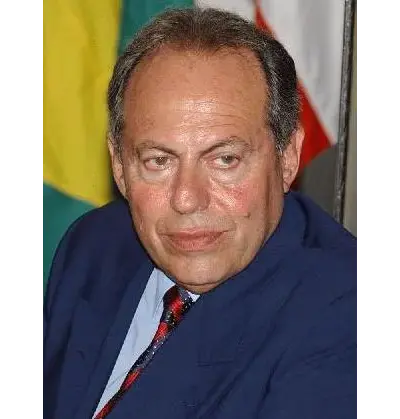
Émile Jamil Lahoud is a Lebanese politician who served as the 16th president of Lebanon from 1998 to 2007.
