George Mason Quotes
“Treason” and “bribery” will not reach many great and dangerous offenses including attempts to subvert the Constitution.
The original proposal made treason and bribery the only grounds for Presidential impeachment. Mason and others argued to broaden the grounds and finally they agreed on “high crimes and misdemeanors.”
George Mason, 1725-1792, Member, Virginia & Federal Constitutional Conventions, Debate, Constitutional Convention, Philadelphia, PA, June 1787
Sourced by: Eigen's Political and Historical Quotations

This appears to be the earliest use of the phrase which was “borrowed” by the founding fathers in the writing of the U. S. Constitution.


President George W. Bush had ignored a federal law and tapped the phones of Americans without probable cause and a warrant issued by a court. The President’s defenders argued that the President, as Commander in Chief, has the Constitutional responsibility to lead the military and protect the nation. Intelligence gathering is part of military activity. Therefore the intelligence gathering is a Constitutional duty and the Congress, under the separation of powers doctrine, may not interfere with the President’s Constitutional Duty to conduct intelligence. Under this doctrine, the President need not obey laws that he believes impinge on his management of the war effort and the defense of the nation. Most legal scholars believe that this argument is nonsense, but the George W. Bush administration has stated the doctrine and it was the subject of much litigation.

The Presidential election of 1800 produced a crisis even greater than that of 2000. There was an Electoral College tie between Thomas Jefferson and Aaron Burr—both of the same party, Democratic Republicans. The Federalist Party led by President John Adams had been totally rejected by the voters and Adams was in third place. However, the Federalists saw an opportunity of maintaining the Presidency anyway. The Constitution threw the election into the House of Representatives with each State delegation having a single vote. In the House, the Federalists had parity with Jefferson’s party which resulted in 35 tie votes. Finally, Congressman Bayard, the sole Congressman from Delaware, withheld his vote on the 36th ballot, thereby electing Thomas Jefferson of the opposition party. His reason was:

Senator Grimes thought that Andrew Johnson was a terrible President, but when the House of Representatives impeached President Johnson and he was tried before the Senate, Grimes voted for acquittal. His reason for the his vote was he thought that the Constitution did not provide for the removal if a President just because he has “Unacceptable.” Johnson survived removal from office by a single vote and had Grimes not been so principled about the Constitution, Johnson would have been removed from office. On the other hand, Johnson was a terrible President and many of the nations racial problems in later years emanated from his actions and inactions while in office.

Powell was the Secretary of State and Addington kept advising the administration that as long as the President was acting in defense of the country in his capacity as Commander in Chief, he did not have to obey any existing laws that had been Constitutionally passed which in the opinion of the President restricted or limited the President or the executive branch. Addington was an attorney and Assistant to the Vice President, but he was given much responsibility for administration policy. Powell the Secretary of State of the Administration could not have disagreed more and although most politicians including Republicans disagreed with the Addington thesis, Powell was one of the few Republicans to criticize the Addington position.

The convention turned down the constitution and would not ratify it until the Bill of Rights was passed later.


The Congress over the last century has ceded much of its Constitutional power to the President. Congress has much power to check the President, but just as Congress has not been very competent at legislating, oversight, and conducting hearings and investigations, it has not organized itself to use the powers it has very well.

From this quotation, {615902} and {615901} it is clear that the framers of the Constitution intended the treaty making powers to be shared by the President and the Senate. In practice, in modern times treaties are usually initially negotiated by diplomats under the supervision of the President and the Senate gets to concur or not in the ratification process. However, there have been a number of treaty failures including the League of Nations where the lack of coordination has resulted in a situation where the Senate had to accept or reject something which the President had negotiated and the Senate rejected the treaty.


Hamilton acknowledged that the major public objection to the new U. S. Constitution was its lack of a Bill of Rights, which Hamilton argued was unnecessary.


See John Marshall's later (1803) use of the concept and term "repugnant." {606483}


Although it seems incredible to us today, thousands of people were arrested and prosecuted under the Espionage Act. The government particularly targeted leftists such as Eugene V. Debs, Bill Haywood, J. Philip Randolph, Victor Berger, John Reed, Max Eastman, and Emma Goldman. Debs was sentenced to 20 years in prison for criticizing the Act itself.

On the Fugitive Slave Act: As one of the leading American Catholic intellectuals during the 19th Century, Brownson’s opinions went far in keeping Catholics from joining the side of the abolitionists. However, just a few years later his tone would change and he would become one of the few Catholic writers to refuse to defend slavery, see {610710}. While the majority of Catholics refused to join the abolition movement, they often did so because abolitionism was closely tied to anti-Catholicism, see Gordon {611392} or Shaftesbury {611106}. Other reasons included Irish immigrants fearful of competition from Black labor and the fear of liberal individualism and social disorder, which was prevalent in 19th century Catholic thought. For a further explanation on the relationship between American Catholics and slavery, see McGreevy {612036}.


George W. Bush. See {618119} for the rejoinder to the defense.
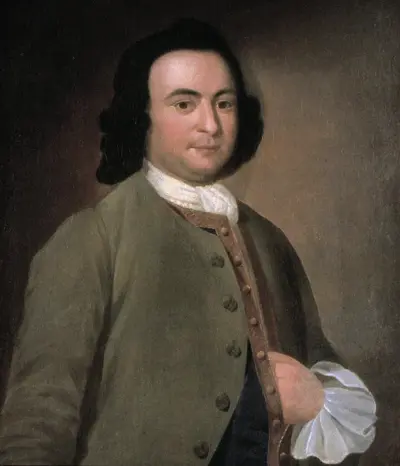
George Mason IV was an American planter, politician and delegate to the U.S. Constitutional Convention of 1787, one of three delegates who refused to sign the Constitution. His writings, including substantial portions of the Fairfax Resolves of 1774, the Virginia Declaration of Rights of 1776, and his Objections to this Constitution of Government (1787) opposing ratification, have exercised a significant influence on American political thought and events. The Virginia Declaration of Rights, which Mason principally authored, served as a basis for the United States Bill of Rights, a document of which he has been deemed a father.
