Andrew Fletcher Quotes
There are at this day in Scotland two hundred thousand people begging from door to door. These are not only no way advantageous, but a very grievous burden to so poor a country … It were better for the nation if they were sold to the galleys or West Indies, than that they should continue any longer to be a burden and curse upon us.
In this incredible proposal the poor were to be sold into slavery.
Andrew Fletcher, 1653-*, Scottish Member of Parliament and Soldier, c. 1699
Sourced by: Eigen's Political and Historical Quotations


Indian and Black slaves were outlawed very early in Connecticut, not on moral grounds of concern for the Indians and Blacks, but because of the negative effects on the white poor. Why would anyone pay the poor any more than the amortization costs of a slave? Therefore there was no way a poor white could make a living wage if slavery were to coexist.


He was pushing the idea of getting the poor and destitute of England to go to the American colonies where a labor force was needed. “Fry” was a term for offspring — children.


As a British Loyalist officer, he and his men were dispatched to Savannah, Georgia. There he saw the Southern version of slavery for the first time and was shocked at the cruelty. At the end of the Revolutionary war, he and many other loyalists fled to Canada and began his political career, then representing Britain in the Caribbean. See also {591379}.


As a result of the programs and philosophy he expounded, Leontiev joyously predicted:


As a young boy, Moyers lived and went to school in Texas where the state has control over all the schools’ curricula and slavery was taught about with little reality.
Many historians of higher education to not agree with Wilder’s overall generality. However, it was certainly the case that slavery was a major factor in generating the funds for some early universities in the North, but others were “hotbeds” of abolition from their very inception.


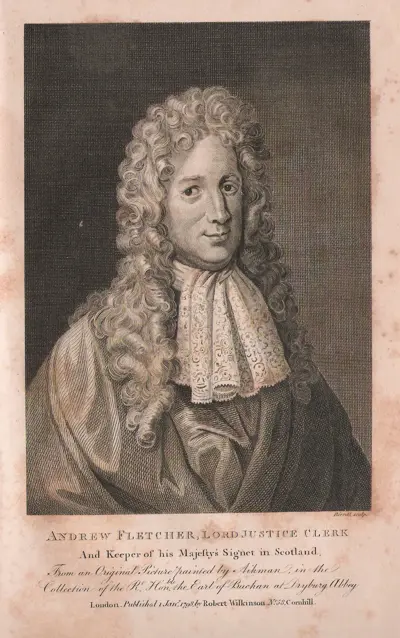
Andrew Fletcher of Saltoun was a Scottish writer and politician, remembered as an advocate for the non-incorporation of Scotland, and an opponent of the 1707 Act of Union between Scotland and England. Fletcher became an exile in 1683 after being accused of promoting insurrection. He was appointed the cavalry commander of the Monmouth Rebellion, but shortly after landing in England he killed another leading figure. He again went into exile, this time as a fugitive and with his estates forfeit. He returned with William of Orange, becoming Commissioner of the old Parliament of Scotland.
