A. P. J. Abdul Kalam Quotes
The world has today 546 nuclear plants generating electricity. Their experience is being continuously researched, and feedback should be provided to all. Nuclear scientists have to interact with the people of the nation, and academic institutions continuously update nuclear power generation technology and safety.
Kalam, A. P. J. Abdul. "Nuclear Power is Our Gateway to a Prosperous Future." The Hindu, 5 Nov. 2011.


Corporations in the nuclear business argue that Nuclear power is less expensive than otehr forns of ower that are in common use. However, when a nation adds the huge cost of maintianing a scientific infrastructure to inspect and regulate the nuclear power plants, and the costof establishing the contingency capability of popularion evacuation and containment when there is a nuclear accident, and then the cost of safely stopring and containing the spent but deadly radioactive fuel, the incredibly high cost of insurance, then it is clear that nuclear power is the most expensive form of power. However, some countries do it better than others with France being the only country at the beginning of the 21st century that operated nuclear power safely and efficiently. The United States, Russia and Japan had huge costs


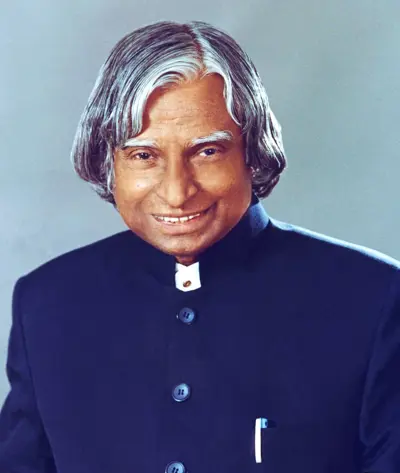
Avul Pakir Jainulabdeen Abdul Kalam was an Indian aerospace scientist and politician who served as the 11th President of India from 2002 to 2007. He was born and raised in Rameswaram, Tamil Nadu and studied physics and aerospace engineering. He spent the next four decades as a scientist and science administrator, mainly at the Defence Research and Development Organisation (DRDO) and Indian Space Research Organisation (ISRO) and was intimately involved in India's civilian space programme and military missile development efforts. He thus came to be known as the Missile Man of India for his work on the development of ballistic missile and launch vehicle technology. He also played a pivotal organisational, technical, and political role in India's Pokhran-II nuclear tests in 1998, the first since the original nuclear test by India in 1974.
