Ralph Chaplin Quotes
The working class owes all honor and respect to the first men who planted the standard of labor solidarity on the hostile frontier of unorganized industry.
Chaplin, Ralph. The Centralia Conspiracy. General Defense Committee, 1920.


Vladimir Lenin

Roosevelt shocked the conservative members of his own party with this statement. Labor unions were not then an accepted concept in American society. Anti trust legislation and enforcement was in its infancy and companies in an industry commonly conspired as to price fixing, labor negotiations and market share allocations. TR had a scrupulous sense of fairness and equity.

Bear was the classic icon of the wealthy, insensitive, powerful, prejudiced snob. He even made other capitalists somewhat sympathetic to the complaints about corporations. See {593878} and {593879}.


The unions that broke off were very successful at increasing union membership and made large efforts at organizing. The others were losing members for the most part and devoted most of their resources to politics to protect what they had.
Cannon was expelled from the Russian controlled American Communist Party for supporting the views of Leon Trotsky who the Russian communists assassinated.

Ironically, this view was also held by many of the capitalist “Captains of American Industry” who believed that all unions were revolutionist regardless of the views of the union’s membership or leadership. Even today, there are some who still equate trade unionism with communism and revolution. The majority of the unions and the left never believed that, but the extreme communists and extreme capitalists did than and some do today.
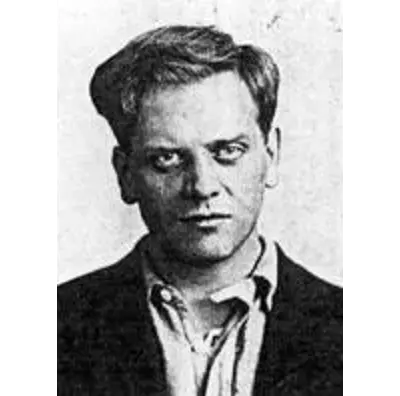
Ralph Hosea Chaplin (1887–1961) was an American writer, artist and labor activist. At the age of seven, he saw a worker shot dead during the Pullman Strike in Chicago, Illinois. He had moved with his family from Ames, Kansas to Chicago in 1893. During a time in Mexico he was influenced by hearing of the execution squads established by Porfirio Díaz, and became a supporter of Emiliano Zapata. On his return, he began work in various union positions, most of which were poorly paid. Some of Chaplin's early artwork was done for the International Socialist Review and other Charles H. Kerr publications.
