Communist International Quotes
The Workers (Communist) Party of America has been for many years an organization of foreign workers not much connected with the political life of the country. Owing to this immigrant exclusiveness two leading groups arose.... For six years an almost uninterrupted struggle for supremacy in the party has been going on between them. The struggle was, in the main, not based on principles ... principles served chiefly to camouflage the struggle for supremacy.
Communist International, [Comintern], Quoted in Howe, The American Communist Party: A Critical History, 1957
Sourced by: Eigen's Political and Historical Quotations


Charles Ruthenberg, the general secretary of the American Communist Party, died in March 1927 amidst a lasting struggle to maintain factional parity within the party.


Every sect of Russian communism had an offshoot in America and in other countries as well. When bad blood broke out between sects in Russia, the battle spread to the rest of the world as when Leon Trotsky was assassinated by Stalinists in Mexico and the Trotskyites were viciously and physically attacked here in America. In many cases there was little ideological difference but the split reflected different leadership styles and personalities. Despite Frank’s warning, American communism was a mirror reflection of Russia until Stalin negotiated the WWII pact with Hitler, when anti-Stalin Communists began to be active, and because America was a more open society, American communists were ahead of their Russian comrades in denouncing Stalinism.


By secret societies, de Tocqueville meant societies or organizations where the membership was secret. He was not referring to organizations like the Masons which had secret oaths and rituals. Secret societies had historically been destabilizing forces in societies. At the time this was written, there were no secret societies in America, but in 1855 a major one developed—The American Party whose members were better known as “Know Nothings” as when they would be asked anything about the party and its organization of beliefs, they would claim that the knew nothing. They were virulently anti-immigrant and anti-Catholic. Subsequently, there have been secret organizations in American politics from time to time, but they have generally been few compared to other countries, and their influence was not long lasting. Most recently, quirks in legal decisions and their interaction with the Constitution have produced non profit organizations which are financed and influenced by unknown people. The major officials of the organizations are known but the members and contributors are secret. These organizations then operate campaigns, most often to attack and damage the reputation of politicians running for political office—most frequently, the Presidency.


Dana Ruth Schwartz. The Republicans who had control of the House of Representatives were reaching the end of the fiscal year and had not yet passed a budget so the government would have to shut down in a few days. They had a very strong position if they wanted to blackmail the Democratically controlled Senate and the Democratic President. The majority of the Republicans decided that they wanted to use the Blackmail tactic, so they passed a budget that they knew the Senate and the President would reject and then the Republicans could hold out for their ransom demands. However, when the Republicans met to decide on what they should demand they neither could agree in what or the timing of their tactics. They had launched a major attack without having a clear objective, an exit strategy or even an alternate if they did not succeed.


Margaret Thatcher has been one of the more dramatic examples.


in the Party central committee Yuly Osipovich Tsederbaum. The Bolshevik (Majority) leader was Lenin. They were in exile in London before the Russian Revolution.
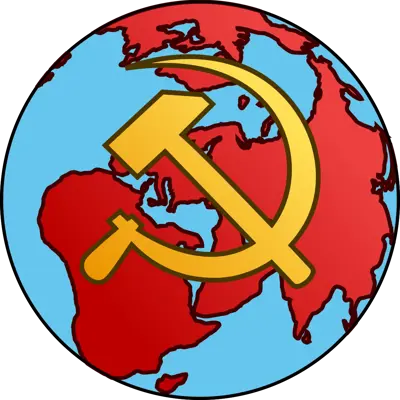
The Communist International (Comintern), also known as the Third International (1919–1943), was an international organization that advocated world communism. It was controlled by the Soviet Union. The Comintern resolved at its Second Congress to "struggle by all available means, including armed force, for the overthrow of the international bourgeoisie and the creation of an international Soviet republic as a transition stage to the complete abolition of the state". The Comintern was preceded by the 1916 dissolution of the Second International.
