Henry A. Kissinger Quotes
In the end, civil wars are about the distribution of power.
Henry A. Kissinger, U.S. Secretary of State (Republican), U.S. National Security Advisor, "Somalia: Reservations," The Washington Post, December 13, 1992
Sourced by: Eigen's Political and Historical Quotations


Nelson was referring to the past. The industrial revolution created other forms of wealth and power as a huge factory could be built on a small piece of land. In farming, the yield is proportional to the acreage tilled. Not so in manufacturing. With the knowledge era, intellectual property could produce much wealth and power, and factory size and land ownership was not necessary.


This was published after he died.


Dana Ruth Schwartz. The Republicans who had control of the House of Representatives were reaching the end of the fiscal year and had not yet passed a budget so the government would have to shut down in a few days. They had a very strong position if they wanted to blackmail the Democratically controlled Senate and the Democratic President. The majority of the Republicans decided that they wanted to use the Blackmail tactic, so they passed a budget that they knew the Senate and the President would reject and then the Republicans could hold out for their ransom demands. However, when the Republicans met to decide on what they should demand they neither could agree in what or the timing of their tactics. They had launched a major attack without having a clear objective, an exit strategy or even an alternate if they did not succeed.


He was a Southerner who was opposed to Slavery. He understood both North and South and feared the Civil War 20 years before the event. See also his letter {615642}.

He was contrasting this with the Supreme Court decision in Bush v. Gore, where by 5 to 4, the Supreme Court made George W. Bush President. Bryer wrote a dissent and the majority of Americans wanted Gore. Yet, the people of America accepted the unpopular decision with which the majority disagreed. The alternative is settling such disputes in the streets with violence. So Bryer strongly advocates the upholding of Supreme Court decisions, even if unpopular and even if wrong as he felt Bush v. Gore was.


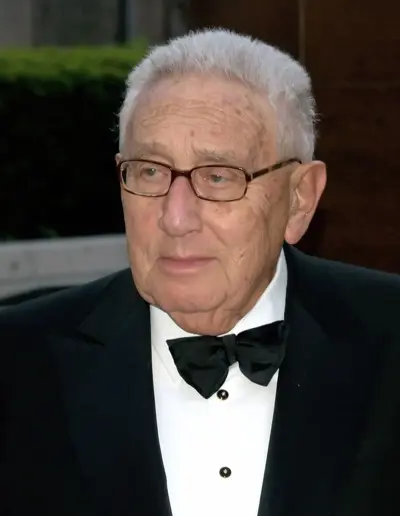
Henry Alfred Kissinger KCMG is an American politician, diplomat, and geopolitical consultant who served as United States Secretary of State and National Security Advisor under the presidential administrations of Richard Nixon and Gerald Ford. A Jewish refugee who fled Nazi Germany with his family in 1938, he became National Security Advisor in 1969 and U.S. Secretary of State in 1973. For his actions negotiating a ceasefire in Vietnam, Kissinger received the 1973 Nobel Peace Prize under controversial circumstances, with two members of the committee resigning in protest.
