Jessica Lynch Quotes
The whole idea that the rescue was staged or the soldiers were shooting blanks, that's just obvious stuff. Why would you do that in the middle of a war? It's just crazy.
Lynch, Jessica. Interview by Diane Sawyer. Primetime, ABC, 11 Nov. 2003.

The quotation was given by Defense Secretary Donald Rumsfeld just prior to the war with Iraq, 2003.


After the report was produced someone had handwritten “Draft” on it. The technique of using government agents to spread disinformation to Americans has always been very controversial. The NYPD claims that despite this report, it is the policy of the department not to allow officers to disseminate disinformation. See {589484}. He did not say that civilian agents or paid informants did not do it for the department.

This covert project — PBSUCCESS — to destabilize Guatemala was exposed by the Guatemalan government. To minimize the embarrassment in the U. S., the PBSUCCESS CIA staff asked headquarters to fabricate sensational stories to keep newspapers and the fledgling TV news busy and distracted from covering the Guatemala story that the CIA was trying to destabilize the government in order to bring about regime change. The CIA was prohibited by law from doing this but the agency at that time ignored many laws. It is not known if the phony stories were actually planted at that time.

Wikileaks had just released 400,000 classified American documents relating to the Iraq War. Many accused him and Wikileaks of endangering the lives of not only soldiers, but Iraq civilians who might be identified as cooperating with the coalition forces by the released documents. The heart of the problem is that governments tend to use classification to hide embarrassing facts or policies that might be controversial as well as to protect legitimate national security secrets and sources and methods of information. The majority of the 400,000 leaked documents, when examined, were clearly not protecting any legitimate people or secrets but just staved off criticism or embarrassment; in many cases, there was no value to the contents and the maw of the censorship and classification process was applied indiscriminately to many documents. A much better argument than Assange made, can be gleaned from the vast number of WWII documents that America, England, France, Russia and others still keep secret, when the people who might have been protected have already died and the methods are long since obsolete.
This has been true in just about every conflict. In WWII however, there were a highly disproportionate ration of atrocities with those of the axis forces dwarfing those of the U. S. and its allies. Further, after the war, those allied atrocities that did take place were published. In addition, one basic difference is in the policies of the fighting forces and their governments as opposed to individual actions by soldiers. In WWII, the allied atrocities were of the latter type, but the axis atrocities involved both.

Most CIA Directors have not had this extreme attitude, but because Casey did, journalists, members of Congress, other government officials and even Presidents have often distrusted the CIA and their personnel more than was necessarily warranted.


A false flag operation is one where a country’s covert operatives attack some asset of the nation and blame it on a foreign enemy—often to consolidate political power or gain public support for a war. For example, the Nazi’s secretly burned down the German parliament and blamed it on the Russian communists.


The phrase “put them under contribution” was a practice of making a town pay for the costs of the British military effort in the area. To some, this was blackmail and extortion, pay cash or get destroyed. The Prime Minister thought that the American public sentiment at the time would not be intimidated to pay in a significant number of towns or cities.
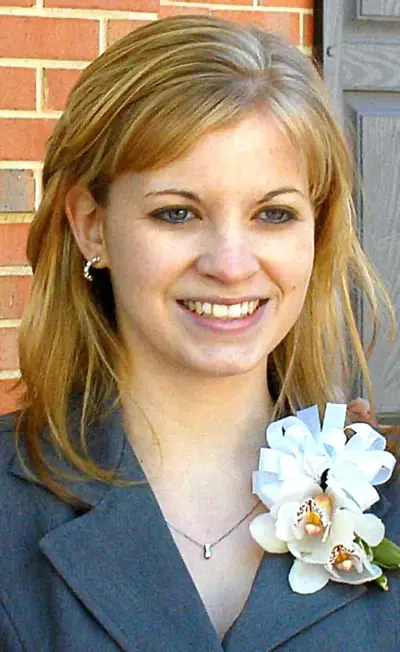
Jessica Dawn Lynch is a former United States Army soldier who served in the 2003 invasion of Iraq by U.S. and allied forces. On March 23, 2003, Private First Class Lynch was serving as a unit supply specialist with the 507th Maintenance Company when her convoy was ambushed by Iraqi forces during the Battle of Nasiriyah. Lynch was seriously injured and captured. Her subsequent recovery by U.S. Special Operations Forces on April 1, 2003 received considerable media coverage; it was the first successful rescue of an American prisoner of war since World War II and the first ever of a woman.
