Thomas Carlyle Quotes
The unspeakable Turk should be immediately struck out of the question, and the country he left to honest European guidance.
Thomas Carlyle, 1795-1881, Scottish essayist and historian, Member of Parliament, Letter to a Meeting at St. James Hall, London, 1876
Sourced by: Eigen's Political and Historical Quotations

The Byzantine emissary had pointed out that Mehmed’s predecessors had signed a treaty agreeing to “consult” with Constantinople before building any fortified structure in the area surrounding Constantinople. Mehmed was only 19 years old at this time. His intention f building a fort was to have a platform from which to attack and capture Constantinople itself which he did 2 years later. Earlier, the Eastern Roman Empire was much stronger and the Ottoman sultans were more cautious in dealing with them. However, the various Christian factions were all feuding with each other, and Mehmed II, despite his youth, was much better organized and was a better leader than his predecessors.

Although the Turks were the enemy, the British when they “liberated” an area, turned to the local governors of the territory and asked them to “carry on,” supplying them with resources if necessary. This was just the opposite of the George W. Bush administration strategy in the Iraq War of 2004, where after taking Baghdad, all the old politicians and governors were arrested and the police and other infrastructure was removed. The replacements were inexperienced and had little respect and influence and the city fell apart. The moral hypocrisy of the British left the “bad guys” in place running things for them instead of the Turks. However, they were able to keep the cities running and keep control of the entire situation.

When the Turks defeated the Christians, the only explanation many Christians could conceive of was that God was on the side of the Turks.


Almost all former colonial nations resent the colonialism and tend to overlook some of the benefits. Like European colonialism, the Ottoman Empire brought many benefits and advancements to their subject peoples but the oppression is what is most remembered by future generations. Despite the terrible history of the Ottoman Empire in the Armenian Genocide and some other massacres, the Ottoman Empire had more than a 500 year influence on a great part of the world�Islamic and Christian – much of which was very valuable to the world even today.

Greece had always coveted Anatolia which was a part of the Ottoman Empire but had been in antiquity a Greek dominated area. Further, people of Greek ethnicity and culture, who hundreds of years ago use to be the vast majority were after the hundreds of years of Ottoman rule and migration were then the largest minority in Anatolia. After the Turks lost the First World War as a consequence of their allying with Germany, and had been stripped of its Arab territories and was determined to keep the territories that they still had. Also, Turkey had just undergone a revolution and the old order was displaced. Venizelos and the Greeks saw this as an opportunity to get back Anatolia and sent a military invasion force to land at Smyrna (Ismir to the Turks), the largest city of Anatolia where despite the Greek minority in all of Anatolia, Greeks were a small majority in Smyrna and many of the ethnic Greeks not only aided the Greeks once they had landed but participated in atrocities against the minority of Turkish Muslims of Smyrna. The Ambassador was then trying to rationalize the heavy hand with which the Turks dealt with the indigenous Greeks many of whom were guilty and many of whom were not.

One of the reasons that Jefferson and others were so anxious to expand the territory of the United States was that Britain had operated with the policy that curtailed and limited the population growth of the American colonies and the resentment of this policy led to growth of America and the Westward expansion.

This quotation illustrates that the Muslim conquest and attempt to destroy and desecrate the symbols of other religions was not limited to Christianity—it was ALL other religions. In that sense, Christianity and Islam of the period were very similar at the time—intolerance to the point of murder and destruction of any “heathen” religion.
The Ottoman Turks had just conquered the city of Constantinople including the Eastern Roman Empire in their domain. They would be the dominant power in the area until the First World War when they made the mistake of siding with the Germans and the Ottoman Empire was broken up in the Treaty of Versailles.

See {640105} and {640104} for more about the Capitulations Treaty.
He was referring to Recep Tayyip Erdogan, teh President of Turkey, While had had a number of very good and successful policies, as he served in the role, he became les and less democratic until at the time of this quotation, many of the dictatorial practices common in most of he Middle Eastern nations were also operational in Turkey. At the same time Erdogan becan rolling back the nation's comittment to being a secular state, implmented of Kalal Attaturk, thich allowed Turkey to develop much mor-so than any other Muslim majority state in the world. The religious, uneducated, and rural people loved him, while the educated, secular and urban population feard Turkey was regressing to the Islamic domination that had kept all the other Muslim Nations backward while Turkey had after its secular revolution European style modernization joined the modern successful nations with a strong, developed economy, an excellent educational system, very competent in science and Engineering, a modern health system.


The deportations were the massive relocation of Armenians by the Turkish Government in 1915. In the late 19th century some Armenians tried to gain independence and were put down and massacred by the Sultan’s troops. A few decades later Russia battled Turkey. Russian Armenians and Turkish Ottoman Armenians had defected and fought for the Russians who beat the Turks badly. The Turks blamed the traitorous Armenians for the defeat and saw the Ottoman Armenians as a hostile force among them. Many Armenians were brutally massacred. Finally the Turks decided to brutally deport by foot, without sufficient provisions, the Armenians from the critically strategic area they occupied, and a huge number of Armenians died in what has been referred to as the Armenian Genocide. See {51838}, and {61904}.

He had concluded that Spain, who then ruled the Philippines, was incompetent, cruel and immoral in its rule, but that the Filipinos were not educated or sophisticated enough to rule themselves. However, he felt that he had to protect our commercial interests in the islands and the region, and was worried that commercial interests of other countries would take over and control the area. Another reason that this is a very important quotation is that it indicates the anti-Catholic bias in America at the time. Note that the President stated that one objective was to “Christianize” them. However, Spain had been in the islands for over 300 years and most Filipinos were already Roman Catholic. However, Roman Catholics were then a much smaller proportion of the American population and many Protestants didn’t think Catholicism was a legitimate Christian Religion. When the majority of Americans thought of Christianizing other people, they thought of Protestant missionaries much like England. At the time there was very little criticism of the President for the “error” of stating that Filipinos should be Christianized when they were so already Spanish Colonial Policy and Practice was generally terrible and particularly so in the Philippines, See {629450}.
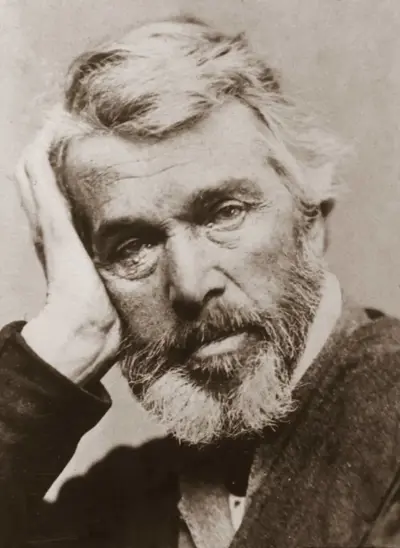
Thomas Carlyle was a Scottish historian, satirical writer, essayist, translator, philosopher, mathematician, and teacher. In his book On Heroes, Hero-Worship, and The Heroic in History (1841), he argued that the actions of the "Great Man" play a key role in history, claiming that "the history of the world is but the biography of great men". Other major works include The French Revolution: A History, 3 vols (1837) and The History of Friedrich II of Prussia, Called Frederick the Great, 6 vols (1858–65).
