Margaret Chase Smith Quotes
The United States Senate has long enjoyed worldwide respect as the greatest deliberative body in the world. But recently that deliberative character has too often been debased to the level of a forum of hate and character assassination sheltered by the shield of congressional immunity.
This was the first Senatorial response against the excesses of Senator Joseph R. McCarthy who publicly accused thousands of Americans of being communists but could never provide any evidence against any of them. He always made his fabricated accusations on the floor of the Senate or during Senate Hearings so that he could never be sued for libel. He refused every challenge to repeat his charges out of the Senate.
Margaret Chase Smith, U. S. Congressman & U. S. Senator (Republican, ME), Declaration of Conscience, 1972
Sourced by: Eigen's Political and Historical Quotations


The Senate was in the midst of a particular bitter debate. The chaplain offered the following prayer.

Introducing a resolution that was later adopted by the senate:


This is an interesting historical quotation in that the same political environment existed in the first two decades of the 21st century. She was in particular referring to the slander that was commonly used by her fellow Republican, Senator Joseph P. McCarthy in his demagoguery. She was the first member of the Senate to Condemn McCarthy for his abuse and lies. Led by her example, the other senators got over their fear of McCarthy attacking them and the Senate Censured the Demagogue.


The objective of a large proportion of the Congress then was not to improve the nation or even pass legislation, but to preserve their ideology and attack and weaken the other party. Compromise for example is probably the best legislative practice, but that Congress had a substantial number of Tea Party and other ultra conservatives who believed that any compromise at all was an immoral abandonment of principle.


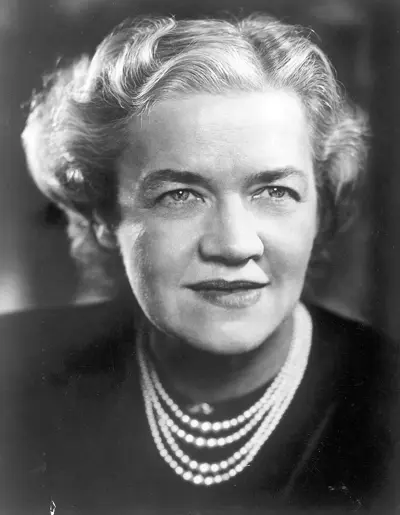
Margaret Madeline Chase Smith was an American politician. A member of the Republican Party, she served as a U.S Representative (1940–49) and a U.S. Senator (1949–73) from Maine. She was the first woman to serve in both houses of the United States Congress, and the first woman to represent Maine in either. A moderate Republican, she was among the first to criticize the tactics of Joseph McCarthy in her 1950 speech, "Declaration of Conscience". Smith was an unsuccessful candidate for the Republican nomination in the 1964 presidential election, but was the first woman to be placed in nomination for the presidency at a major party's convention.
