Margaret Chase Smith Quotes
Today our country is being psychologically divided by the confusion and the suspicions that are bred in the United States Senate to spread like cancerous tentacles of "know nothing, suspect everything" attitudes.
This is an interesting historical quotation in that the same political environment existed in the first two decades of the 21st century. She was in particular referring to the slander that was commonly used by her fellow Republican, Senator Joseph P. McCarthy in his demagoguery. She was the first member of the Senate to Condemn McCarthy for his abuse and lies. Led by her example, the other senators got over their fear of McCarthy attacking them and the Senate Censured the Demagogue.
Margaret Chase Smith, 1897-1995, U. S. Senator (Republican, Maine), Declaration of Conscience, 1950
Sourced by: Eigen's Political and Historical Quotations

She was referring to the slander that was commonly used by her fellow Republican, Senator Joseph P. McCarthy in his demagoguery. She was the first member of the Senate to Condemn McCarthy for his abuse and lies. Led by her example, the other senators got over their fear of McCarthy attacking them and the Senate Censured the Demagogue.

This is a classic example of one of the many politicians of the 20th and 21st century who would call anyone a communist who opposed anything that he regarded as American. In actuality, there were some very conservative economists and shareholders who did not think that the funding of celebrations had little or no value for shareholders. Many on the left were concerned that the celebration was in great part paid for by all Americans because of the tax deduction that was allowed. However none were communists.

35 years earlier Vice President Hubert Humphrey used the same phrase to describe Republican attacks.


The text was actually written by John Kenneth Galbraith who was writing speeches for Stevenson.


The nation was facing the scourge of McCarthyism. Senator Smith was the most courageous member of the Senate in denouncing the lying demagogue of her own party who was so powerful at the time—Joseph R. McCarthy. At the same time, there were some communists trying to undermine the values or the nation as well as the fascists. Smith was one of the first to recognize the danger of both.

She was the first member of the Senate to Condemn McCarthy for his abuse and lies. Led by her example, the other senators got over their fear of McCarthy attacking them and the Senate Censured the Demagogue. She had a significant role in stopping and censuring Joseph P. McCarthy, but her “Four Horsemen” have been a constant struggle for moderate Republicans thereafter. While she was one of America’s great senators, 60 years later she would not be able to be nominated by her own party it had moved so far to the right.

Seeger had been a member of the Communist Party and had left it in 1950. See {635866}. He was later called before the House UnAmerican Activities Committee and asked to reveal the names of others who had been members. In those days of the red scare and McCarthyism, most people asked to name names and not wanting to do so “took the 5th Amendment” and could not be legally forced to reveal the names. Seeger as a matter of principle refused to plead the 5th Amendment because he was not afraid of incriminating himself and had done nothing criminal anyway. So he, a war veteran of WWII, instead refused to answer citing his First Amendment right of freedom of association. There was no legal precedent for this, and he was indicted and convicted for Contempt of Congress. However, his conviction was overturned as unconstitutional by the U. S. Federal Appeals court. Seeger had prevailed legally. But in retaliation Seeger was blacklisted and none of the radio of TV networks or Hollywood Studios would allow him (and other blacklisted artists) to appear. See {642545} Today most Americans view what McCarthy, The Congressional Committee, the networks, and Hollywood studios had done as contemptible.

At the time Congress was gridlocked in bitter hyperpartisan conflict. Most people called for more comity and bipartisanship and most politicians wanted more bipartisanship but blamed the other party for the rift. Mourdock, arguing for less bipartisanship and no compromise defeated Richard Lugar in the Republican Senatorial Primary election. Lugar, one of the most respected and effective Senators was a statesman who worked with any and all to find effective compromises to reach national solutions. The nation was so politically polarized that the Republican Indiana voters ousted one of their most senior senators because he was effective at developing national solutions. See {626717} and {302706} for other Mourdock’s outrageous comments. While this rhetoric won in the Primary, it lost him the general election in a state where Republicans had a strong majority and should have had the seat.

See {632333} for the offensive McCarthy attack on Zwicker.


In the 2016 Presidential Elections, there were a few close states. However, in most states one of the candidates won by a signficiant margin proucung some states that supported Trump and some who opposed Trump--hence "Divided States of America".


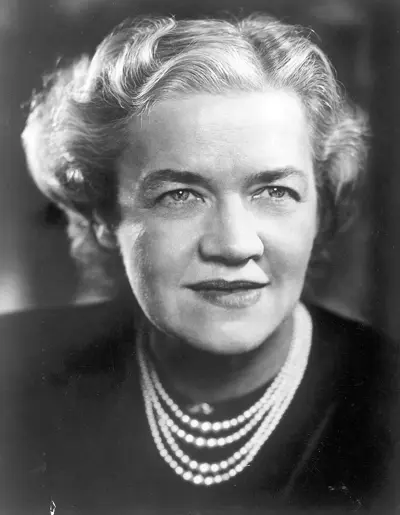
Margaret Madeline Chase Smith was an American politician. A member of the Republican Party, she served as a U.S Representative (1940–49) and a U.S. Senator (1949–73) from Maine. She was the first woman to serve in both houses of the United States Congress, and the first woman to represent Maine in either. A moderate Republican, she was among the first to criticize the tactics of Joseph McCarthy in her 1950 speech, "Declaration of Conscience". Smith was an unsuccessful candidate for the Republican nomination in the 1964 presidential election, but was the first woman to be placed in nomination for the presidency at a major party's convention.
