Eiichi Shibusawa Quotes
The treatment of Japanese in America is so grave that it may endanger our international relations and welfare.
1st Viscount Shibusawa. Not only was there gross discrimination—mostly in the Western States—against the Japanese, but they were subjected to physical harassment and violence.
Eiichi Shibusawa, 1840–1931, Japanese Industrialist, President of the Dai-Ichi Kokuritsu Ginkō, Chairman, Japanese American Relations Committee of Tokyo, Statement for the Committee, June 5, 1923
Sourced by: Eigen's Political and Historical Quotations

While the Western nations were doubtless guilty of blatant racism and anti-Asian discrimination, the Japanese protest was tainted with a substantial degree of hypocrisy. At the Versailles Peace Treaty negotiations the Japanese argued strenuously for equal treatment of Japanese by the West but did not favor extension of the equality principle to Koreans, Chinese, Thais, Chomoros, and other Asian peoples. Japan itself, led by its Emperor, considered other Asian people racially and culturally inferior. Thus they were the inherent leaders of Asia and all Asian people.


This quotation illustrates how extensive and virulent anti-Asian racism had become. Gompers was a left wing liberal, but also a labor leader, and the prospect of millions of oriental immigrants competing for the existing American jobs was frightening. The irony of this quotation was that most of the labor constituency that Gompers represented had been immigrants or were the children of immigrants who earlier had frightened American workers and whose ethnicity had been opposed—Irish, Italians, Jews.


The United States and some other nations had laws that specifically discriminated against Japanese in immigration and other aspects of society.
This resolution was bad enough for its overt racism. Ironically, the major victims of Japanese aggression have been Asians—China, Korea, Manchuria, and others. “White” empires had economic interests in throughout Asia and this was what Britten and many others were concerned with protecting. This quotation is important for another reason. At the very moment Britton introduced the resolution, Charles Evans Hughes our Secretary of State was welcoming a new, very high level ambassador to Washington. The administration had decided on a negotiating initiative and Britton and other Congressmen cut the legs out from under the administrations diplomatic efforts. It was particularly bad because one of the Japanese complaints about America and other white nations was their racism and discrimination against Asians. Congress undermining Administration diplomatic efforts has an all too frequent history in America.

The Proclamation was a belated admission of the disgraceful internment of loyal Japanese Americans during WWII. See {587961}. “Evacuation” was the euphemism for rounding up Japanese American citizens and putting them in internment camps. Not a single Japanese American was involved in any effort to sabotage or undermine the United States. The same cannot be said about the German Americans where a few did work against U. S. interests and yet the German-Americans were never rounded up. The explanation of the difference has been long debated. Racism was a part of it; California paranoia, another. And unfortunately, Japanese Americans owned very desirable land in California and when they could no longer make their payments some interests gobbled up the land and that was a motivation for some. Regardless, it was one of the low points in American history, and warranted this Presidential and national apology.


This statement shortly after the Japanese attacked Pearl Harbor, was remarkably prescient. The last sentence was exactly what happened although at the time some criticized him for being too paranoid about racial matters.

This quotation is a wonderful use of sarcasm to make an important point in just a few words.

Noble and Holy Order of the Knights of Labor. This usually progressive organization advocated the 8 hour work day and control of child labor but when it came to competitors for their members jobs, they became a leading racist and anti-Chinese immigration voice in America. The irony of this quotation was that most of the labor constituency that the Knights represented had been immigrants or were the children of immigrants who earlier had frightened American workers and whose ethnicity had been opposed—Irish and Italians.


He was agreeing with the Right Wing racist Dutch politician Geert Wilders that one of the dangers of immigration of different races and ethnicities is that their children would not be capable or able to contribute to America or in his view make America Great Again as it has been diminished by all these immiogrant babies of the last few generations. There are very few areas of civilization where America is not greater today than ever before.


For Christians and Jews, this statement has formed a moral obligation to not oppress immigrants and asylum seekers.
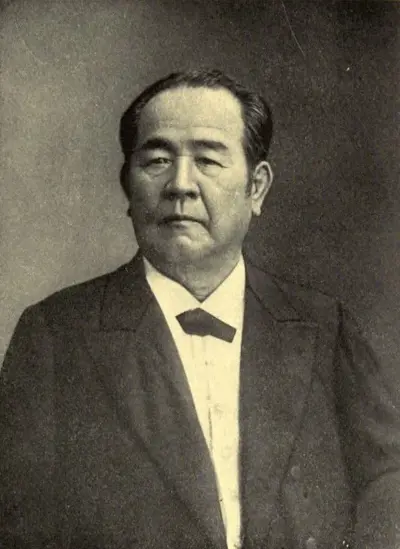
Shibusawa Eiichi, 1st Viscount Shibusawa was a Japanese industrialist widely known today as the "father of Japanese capitalism". He spearheaded the introduction of Western capitalism to Japan after the Meiji Restoration. He introduced many economic reforms including use of double-entry accounting, joint-stock corporations and modern note-issuing banks.
