Kay Bailey Hutchison Quotes
The traditional role of the Senate has been to be the adult in the room.
United States, Congress, Senate. Senator Hutchison's Farewell Address. Congressional Record, vol. 158, pt. 12, Government Printing Office, 12 Dec. 2012, p. S7741.


At the time it was presumed that the Senate would not be popularly elected and it was not in the early years of America.


Most legislative bodies have rules about when and under what conditions a vote is taken. Amendments, procedures, committees all have procedures where votes may be taken that could defeat a nomination or a proposed law but if those defeats fail, there still is not necessarily a law passed or a nomination confirmed. That has to be a separate vote, often called an “up or down vote.” One parliamentary mechanism for opposing a bill or a nomination is to keep voting on amendments and procedures and never have an up or down vote. This is actually true with the vast majority of the laws proposed in both houses of the Congress. Most never do have an up or down vote. Why Gerhatdt and other ask should judicial nominations be different from any law, or any other presidential nomination? Also see {588517} for another factor.

Originally published as The Cynic’s Word Book


1st Earl of Beaconsfield. The “Second Chamber referred to the House of Lords—the upper house of the British Parliament. The notion in both England and the United States was that the upper house—the Senate in the US case—should be independent and not easily pressured or influenced by the passions and forces of the time. One believe has been that only the wealthy could be independent since people who were not wealthy would be more easily bribed or pressured by forces in the system like a political party. In England at the time, wealth and property were synonymous. In some notable cases in American politics, wealth leaders were very independent and served the society as a whole. Theodore Roosevelt, Franklin Delano Roosevelt, and John F. Kennedy were very wealthy men. So was Abraham Lincoln who had made a great deal of money as a lawyer. Senators and Presidents in America and Members of the House of Lords in England have tended to be much more wealthy than average. Unfortunately, although there were great examples of wealthy independent politicians, many of the upper class have an insensitivity to average people and the poor. Further, they tend to have values and beliefs that are different from most people.


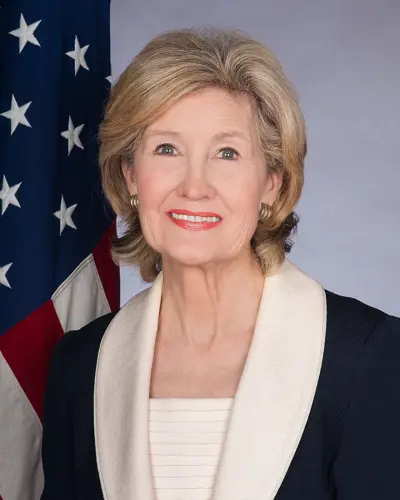
Kay Bailey Hutchison is an American attorney, television correspondent, politician, diplomat and the 22nd United States Permanent Representative to NATO from 2017 until 2021. A member of the Republican Party, she previously was a United States Senator from Texas from 1993 to 2013.
