Jose Marti Quotes
The spirit of a government must be that of the country. The form of a government must come from the makeup of the country. Government is nothing but the balance of the natural elements of a country.
Jose Marti, 1853-1895, Cuban Revolutionary Leader, Our America, 1891
Sourced by: Eigen's Political and Historical Quotations

Even in modern times many politicians the world over agree with Davis’s point that for a government to function well, the nation must have a homogenous citizenship. This is especially true of dictatorships where control of a uniform culture and populous is easier than if it is diverse nation. In modern times, the three greatest economic and scientific powers, the United States, The Soviet Union, and China were and are multicultural societies with different ethnicities, races, religions, and cultures among their sitizenry.


Anthony Ashley Cooper


Note the similarity to Lincoln who Ataturk very much admired.


Even in democracies, governments sometimes adopt programs or policies which are not those preferred by a majority of the people. Frequently, a program which has initial public support losses that support yet the government “stays the course”. Legislative and Constitutional complexities sometimes will allow minorities to dictate practices and policies that do not have majority support. In pseudo-democracies and authoritarian regimes the people have little to say in government activities. The result is that there is often a distinction between a society and its government. In many cases foreign opinion of a government and its people are different. America is the classic example, where Americans and American society is much more popular in many nations than is the United States government.


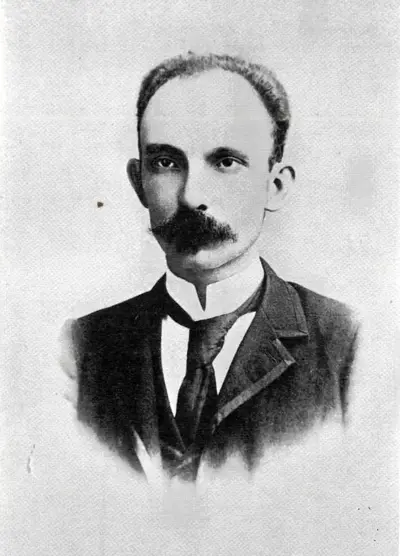
José Julián Martí Pérez was a Cuban poet, philosopher, essayist, journalist, translator, professor, and publisher, who is considered a Cuban national hero because of his role in the liberation of his country. He was also an important figure in Latin American literature. He was very politically active and is considered an important revolutionary philosopher and political theorist. Through his writings and political activity, he became a symbol of Cuba's bid for independence from the Spanish Empire in the 19th century, and is referred to as the "Apostle of Cuban Independence". From adolescence, he dedicated his life to the promotion of liberty, political independence for Cuba, and intellectual independence for all Spanish Americans; his death was used as a cry for Cuban independence from Spain by both the Cuban revolutionaries and those Cubans previously reluctant to start a revolt.
