George Reisman Quotes
The slaves of socialism are slaves, but they are no one's property and therefore no one's loss.
George Reisman, Political Economist, A Treatise on Economics, 1996
Sourced by: Eigen's Political and Historical Quotations


As a result of the programs and philosophy he expounded, Leontiev joyously predicted:


Hoover’s testimony not withstanding, communism in America never did spread like an epidemic.

He was advocating a middle ground between corporate and wealthy individuals’ control of the government which then to a great extent existed and the Communist idea of the dictatorship of the proletariat.


The Nationalist/Fascist views in the Spanish Civil War were so gross that they actually hurt the Nationalist cause in International opinion. See {592113} for another example. Despite the facts, most of the Western world was not then knowledgeable about the evils of Fascism and distrusted democracy, socialism, and communism more.


At that time virtually all of the nations of Europe were monarchies or dictatorships and freedom was virtually non existent.

Francisco Ascaso, Buenaventura Durruti, Juan Garcia Oliver, Aurelio Fernandez, Ricardo Sanz, Gregorio Jover, Antonio Ortiz and Antonio Martinez "Valencia

Socialism in its then pure form had the state owning and controlling all the major assets of the nation. In this sense it was contradictory to individual freedom and hence democracy. However, in the years after Tocqueville’s quotation and the industrial revolution, socialism has gradually moved away from state ownership and operations of all institutions and resources. Democracy has tended to adopt a more regulatory view to control the excesses of unbridled capitalism. The range of democratic nations by the 21st century encompassed differences but some were described as “social democracies” and had some state ownership but were basically capitalistic economies. Even the self-described Communist nations had become heavily capitalistic albeit with less political freedom. At the same time, even the United States—the epitome of 21st century capitalism, owned and controlled a few of the resources and means of production and tended to regulate the others—a substantial difference from the American democracy which Tocqueville studied.


Although English, Cobett spent time in America and published a newspaper, The Porcupine Gazette, in Philadelphia. We was very conservative and even proposed legally enslaving the lazy poor. One of the reasons that he spent time in America was that he thought that England had become hopelessy democratic but thought there might be hope for America. Cobbett and his paper represented the extreme right wing fringe of the then Federalist Party. His Porcupine Gazette had a paying readership of 3,200, the largest circulation of any American daily newspaper.
Hopkins was complaining about the fact that England could tax the colonies and thereby take their property without their consent made the American colonists in the “miserable condition of slaves.” Essentially the fundamental complaint of the Americans was this and in a decade it would erupt as the American Revolution. At the same time, Hopkins was a slave owner and yet saw nothing wrong with that.


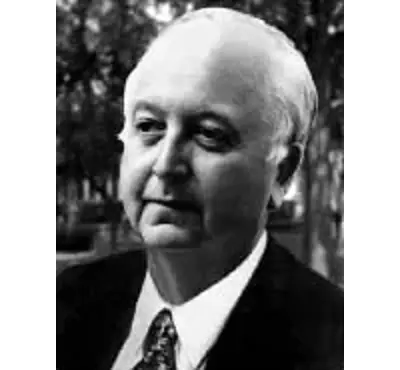
George Gerald Reisman is an American economist. He is Professor Emeritus of Economics at Pepperdine University and the author of The Government Against the Economy (1979), which was praised by both F. A. Hayek and Henry Hazlitt, and Capitalism: A Treatise on Economics (1996). He is known as an advocate of free market or laissez-faire capitalism.
