Cesare Beccaria Quotes
The severity of punishments ought to be relative to the state of the nation itself. Stronger and more easily felt impressions have to be made on a people only just out of the savage state. A lightning strike is needed to stop a fierce lion who is provoked by a gunshot.
Beccaria, Cesare. On Crimes and Punishments. Translated by Henry Paolucci, Bobbs-Merrill, 1963, p. 43.


Livermore's argument fell on deaf ears, and the amendment was passed over the objection of a few arch-conservatives.

There was, and still is in some parts of the world, this belief taht one of the main reasons for capital punioshment with visible and public executions was to deter others from comitting crimes by seeing the example of what happens to the transgressors. For these people, exemplified by this quotation of Dr. Johnson's, public executions are crime prevention. This notion tirned out to have been a fallacy. In England they found that during every public hanging, skilled pickpockets would steal from the onlookers who were tranfixed on the macabre secene--this despite the fact that pickpocketing was a hanging offence.


Wade was urging the Prince to abolish the Death by 1000 Cuts {641825} and simply rely on beheading the form of execution for “lesser” crimes. Note that the Prince’s fears and arguments parallel the same given by modern proponents of the Death Penalty—without it criminals would not be controlled and instability would ensue.


Sherman was distressed at the full due process and trials that had to be given to Confederate spies and guerrillas and wanted to execute them quickly as an example. He complained to the Judge Advocate General that his men were “losing prisoners in the swamp” which both of them realized meant the immediate execution of prisoners by soldiers and junior officers which Sherman did not like either. The Lincoln administration insisted on the full due process. Even after conviction, President Abraham Lincoln tended to pardon many of the condemned.

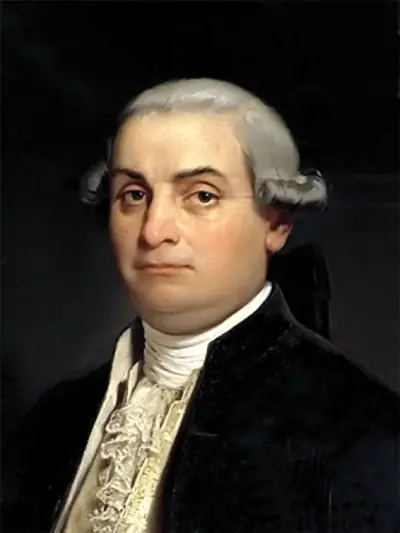
Cesare Bonesana di Beccaria, Marquis of Gualdrasco and Villareggio was an Italian criminologist, jurist, philosopher, and politician, who is widely considered one of the greatest thinkers of the Age of Enlightenment. He is well remembered for his treatise On Crimes and Punishments (1764), which condemned torture and the death penalty, and was a founding work in the field of penology and the Classical School of criminology. Beccaria is considered the father of modern criminal law and the father of criminal justice.
